
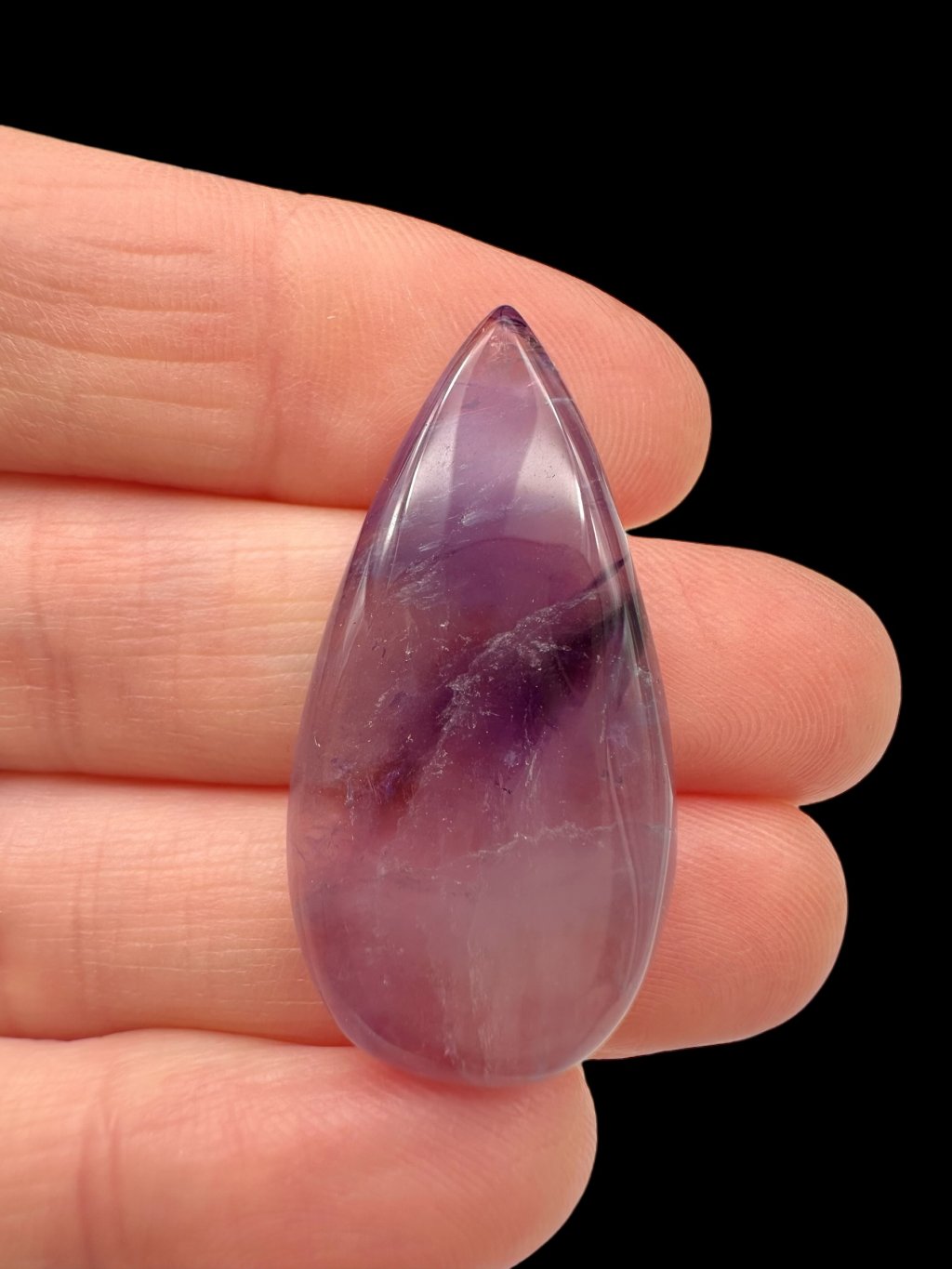
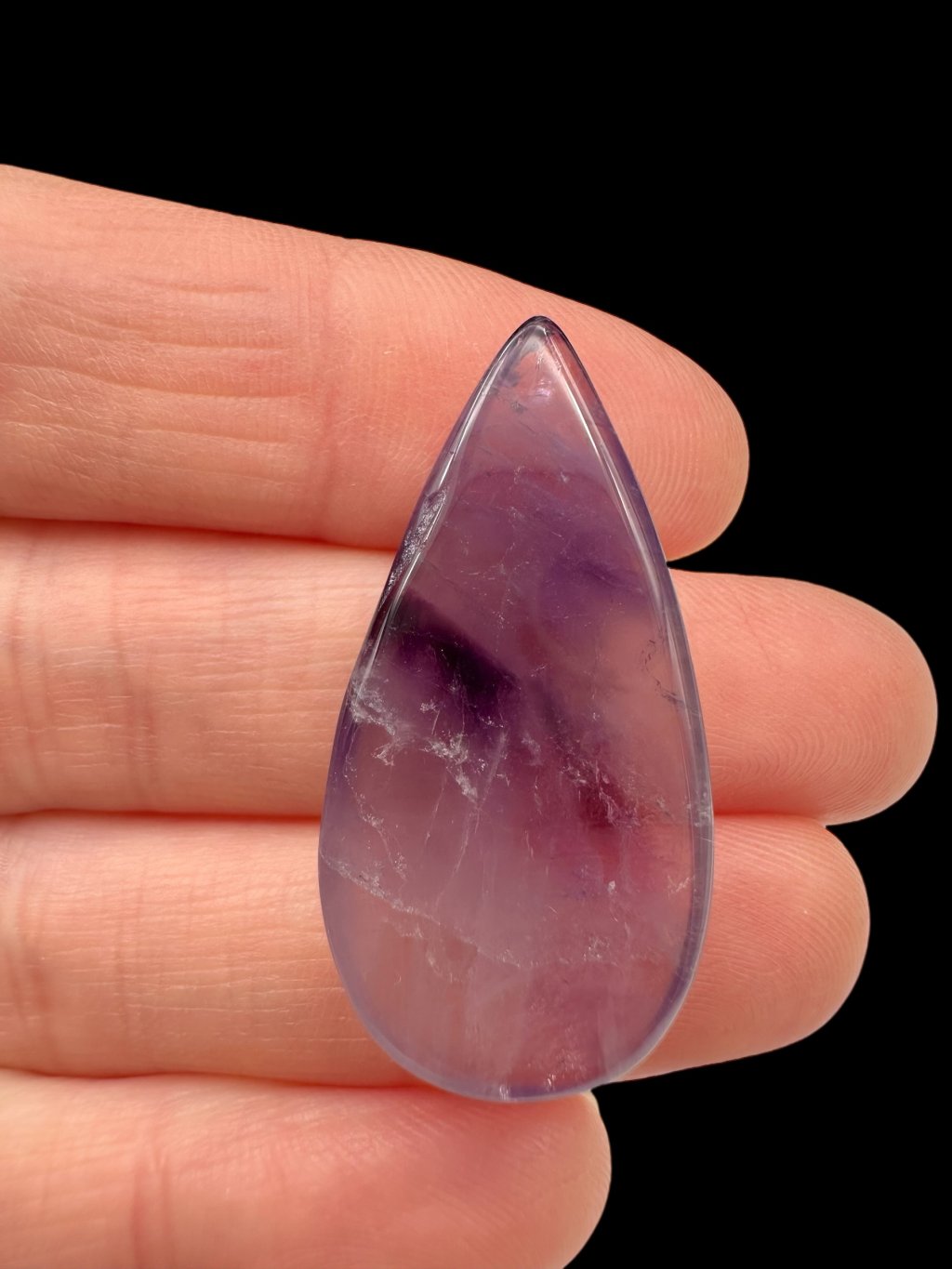
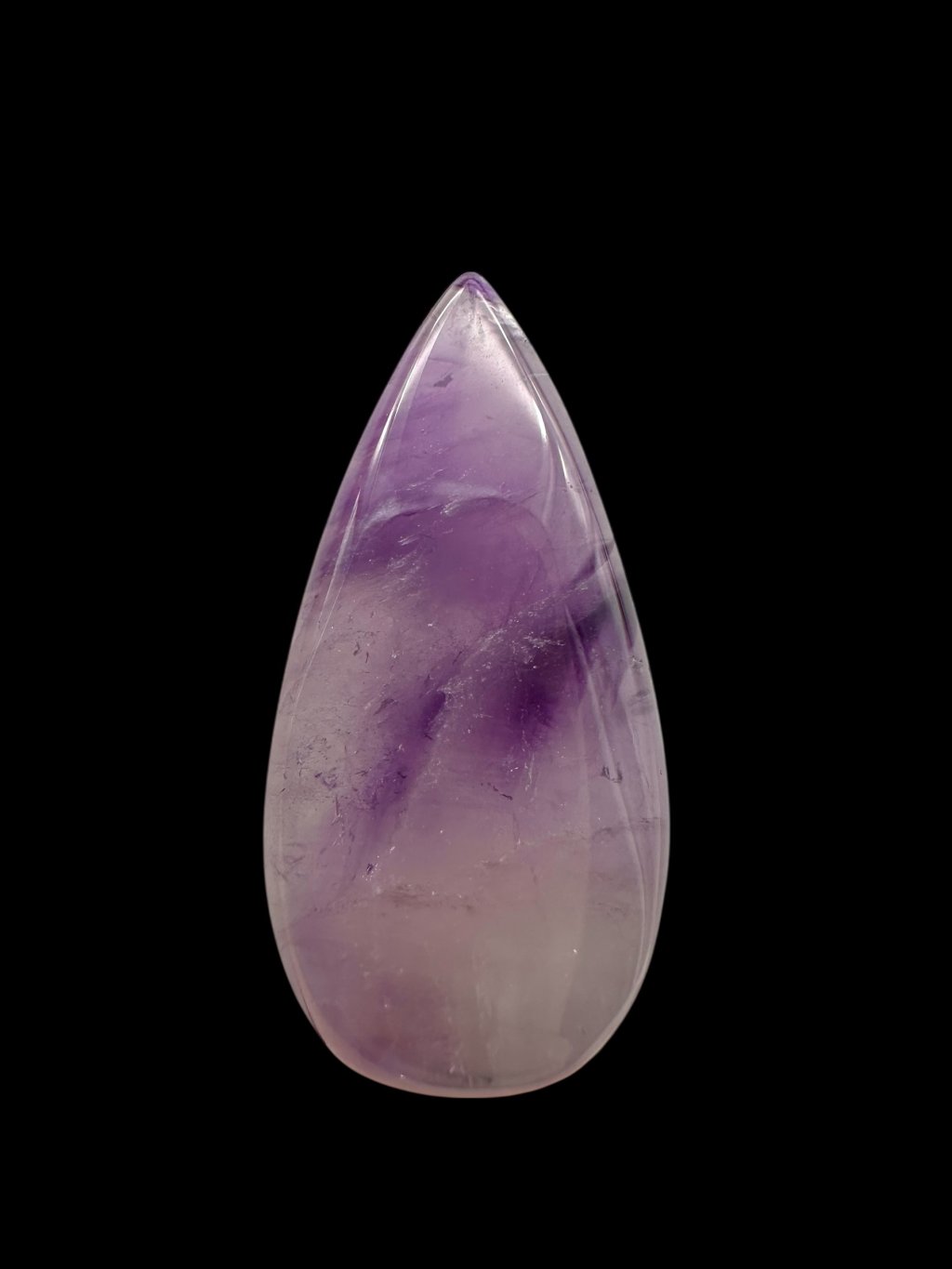
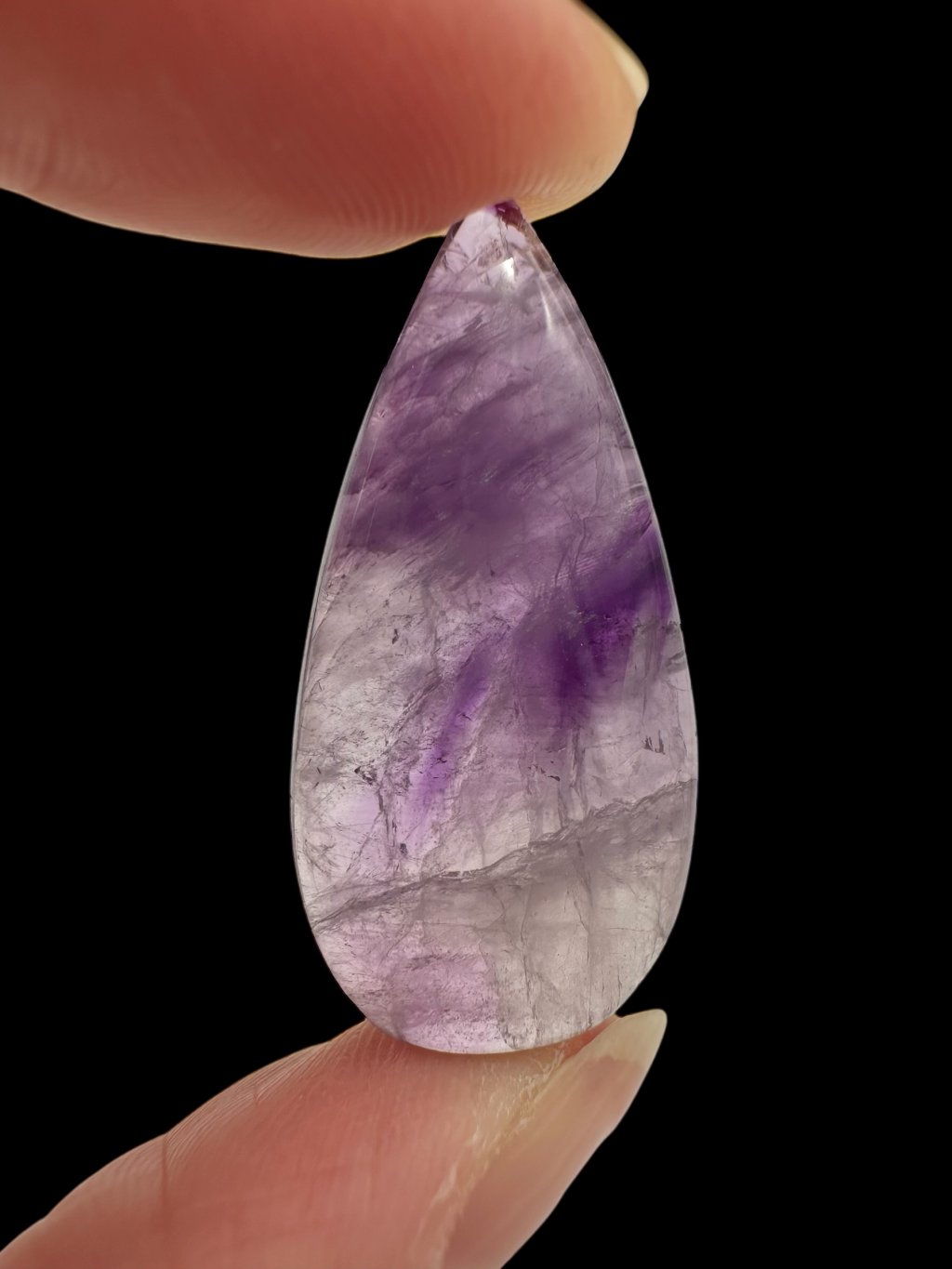
Amethyst cabochon – Bolivia
Locality: Bolivia
Weight: 4,6g
Dimensions: 3,4 x 1,7 x 0,5 cm
| Category: | Amethyst |
|---|


Free gift
For order over 50 $

Shipping within 2 working days

Amethyst cabochon – natural purple mineral
Amethyst cabochon is a processed mineral belonging to the quartz group. This mineral is characterized by its typical purple color, which can range from delicate light lavender shades to deep, rich purple tones. The coloration of amethyst is caused by the presence of trace iron in the crystal structure and the subsequent influence of natural radioactive radiation during its geological development. Long-term exposure to intense sunlight may, however, cause gradual fading of the original color.
Cabochon and its use in jewelry
Cabochon is a specific type of cut that has no facets, but instead a smooth, rounded, and polished surface. This method of processing enhances the natural color, pattern, and internal structure of the stone. Amethyst cabochons are very popular in jewelry making, where they are mainly used in the production of rings, pendants, earrings, or bracelets. Thanks to its hardness of 7 on the Mohs scale, amethyst is sufficiently durable for everyday wear.
Formation of amethyst
Amethyst forms by crystallization from hot mineral-rich solutions that penetrate cavities in rocks. Crystals grow on the walls of these cavities and form druses. If the cavity remains partially empty, a geode is formed. In some cases, these cavities can reach considerable sizes, especially in Brazilian deposits, where impressive geodes measuring several meters can form.
Amethyst localities
The most important deposits of amethyst are located in Brazil, Uruguay, Bolivia, and Madagascar. Each locality produces stones with slightly different shades and characteristics. The highest quality and darkest amethysts mainly come from Uruguay and Brazil, especially from the state of Rio Grande do Sul. Significant deposits are also found in Madagascar, Zambia, Russia, Sri Lanka, and Mexico. Beautiful crystals have also been found in Europe, for example in the Alps and the Ural Mountains. In the Czech Republic, amethyst is known from areas such as Kozákov, the Třebíč region, and the Ore Mountains.
History and significance of amethyst
Amethyst was already considered in ancient times to be a stone of protection, calm, and spiritual balance. Its name comes from the Greek word “amethystos,” meaning “not intoxicated,” as it was traditionally associated with protection against negative influences.