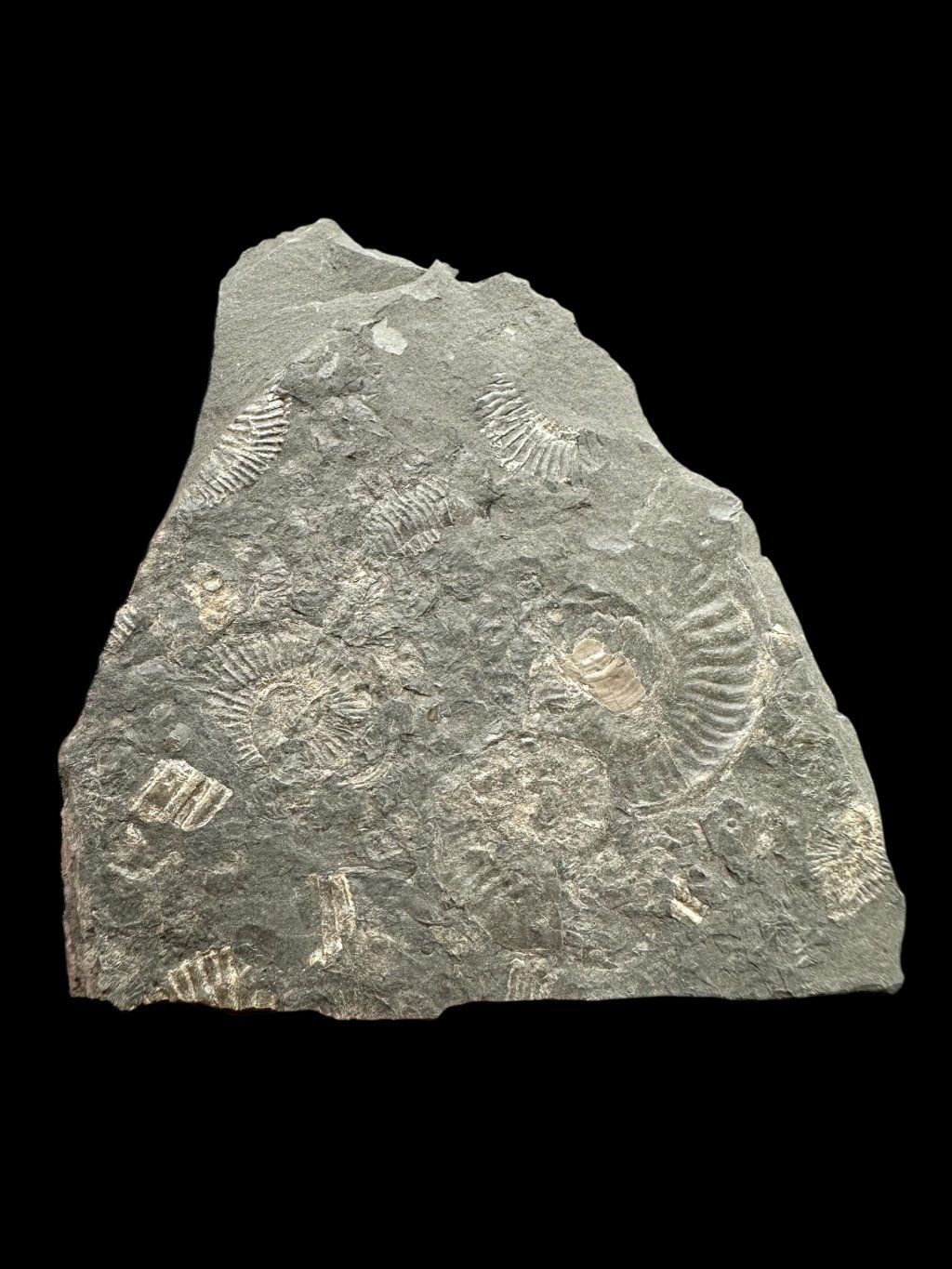
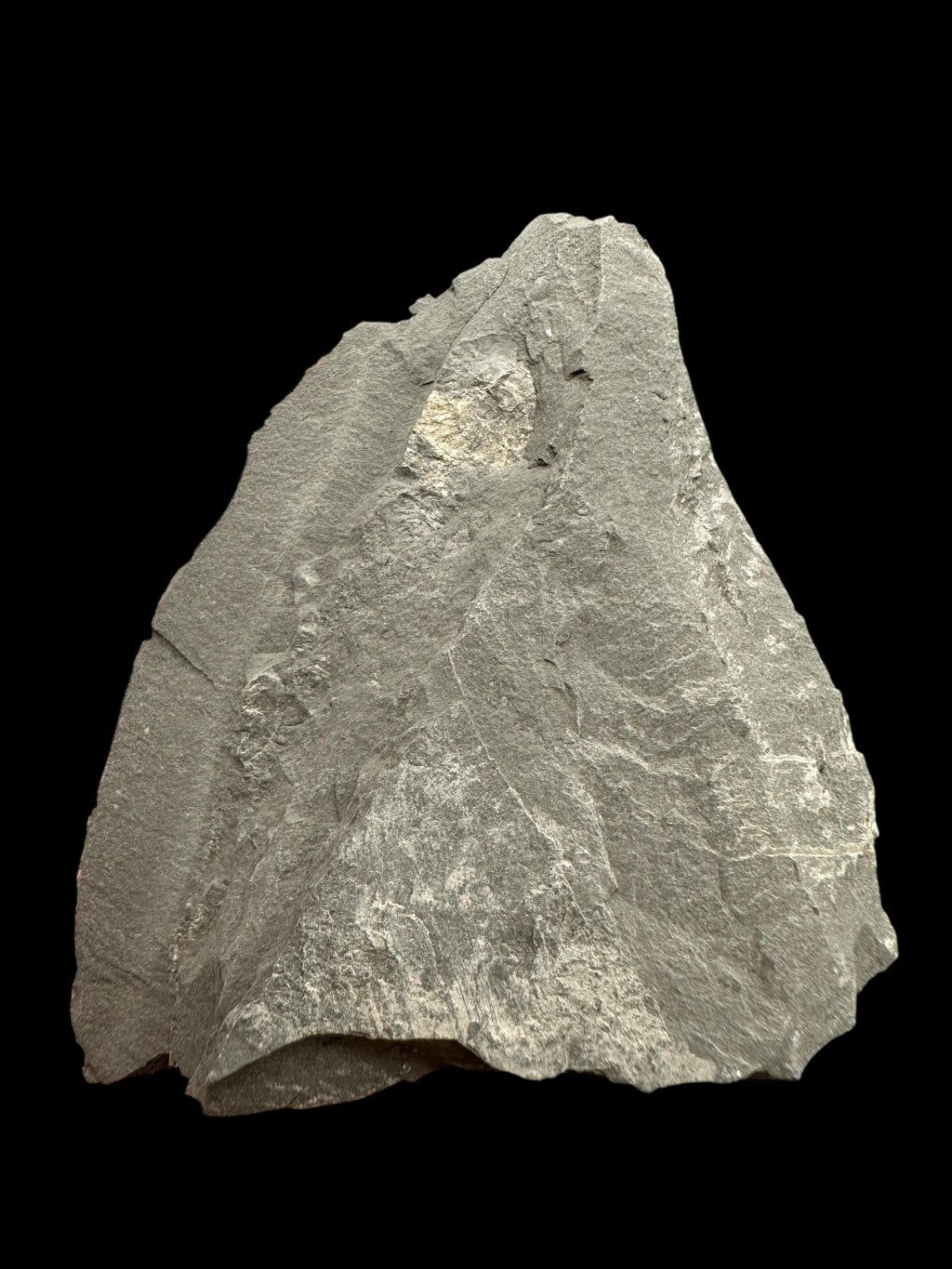
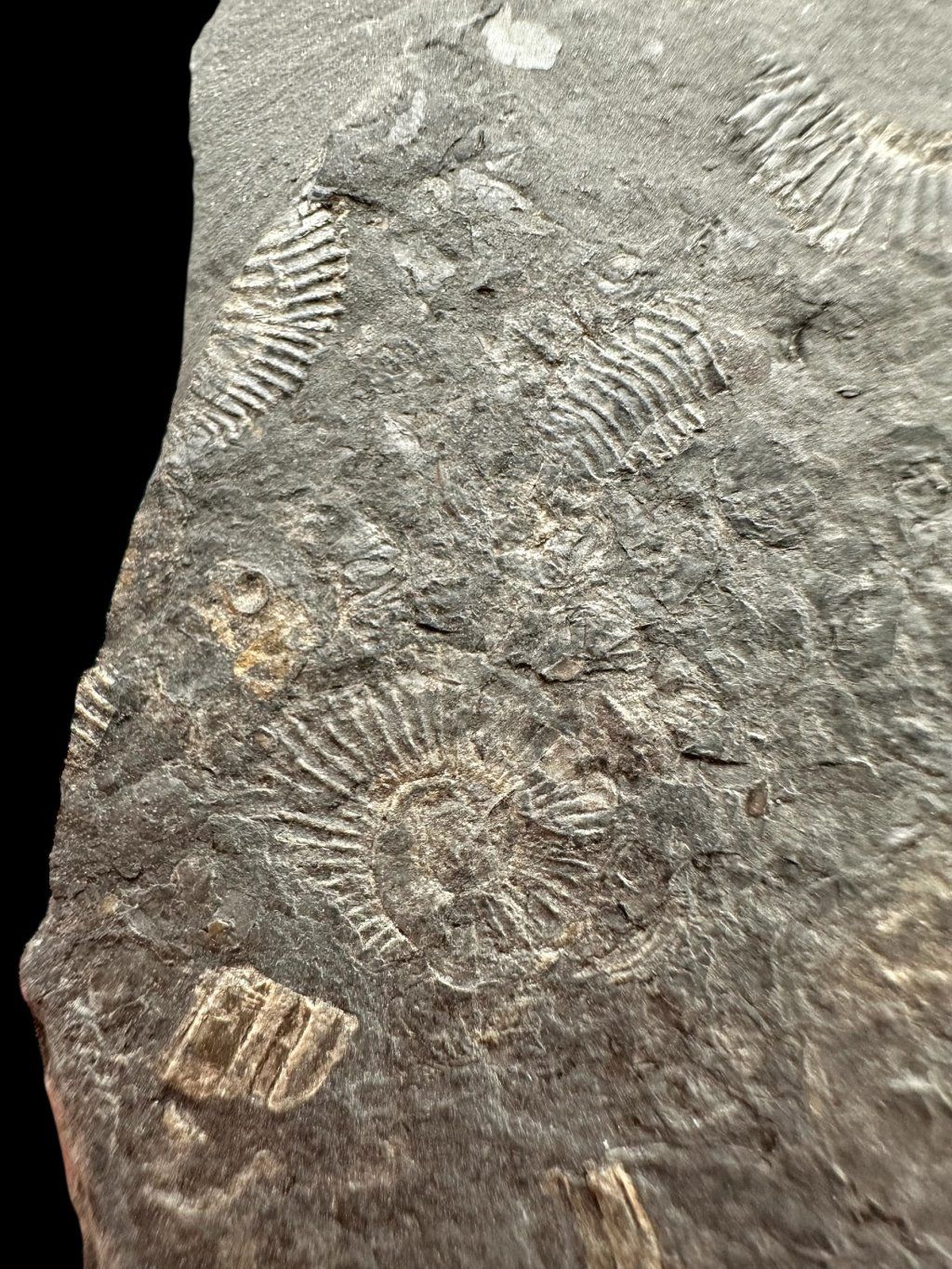
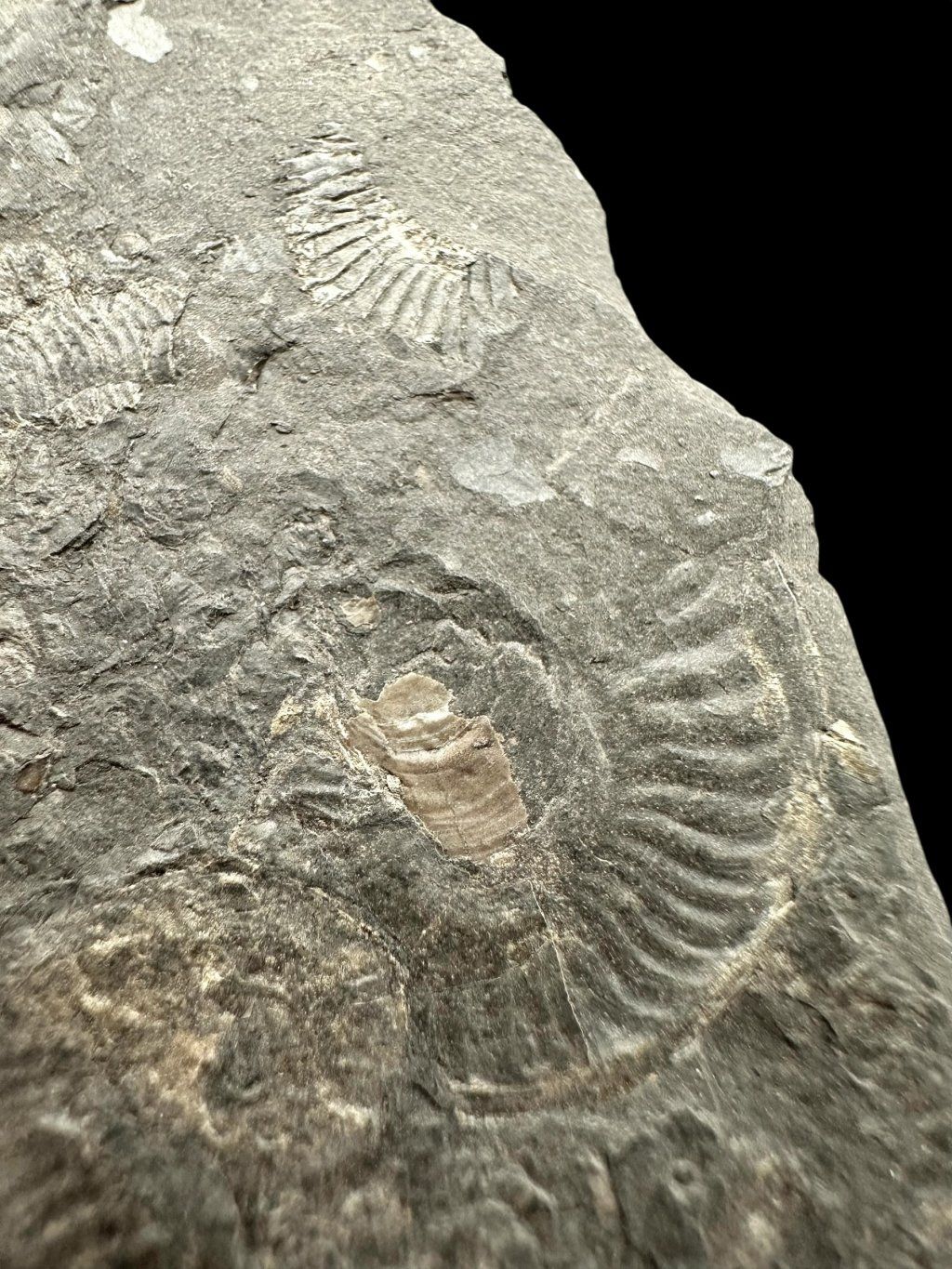
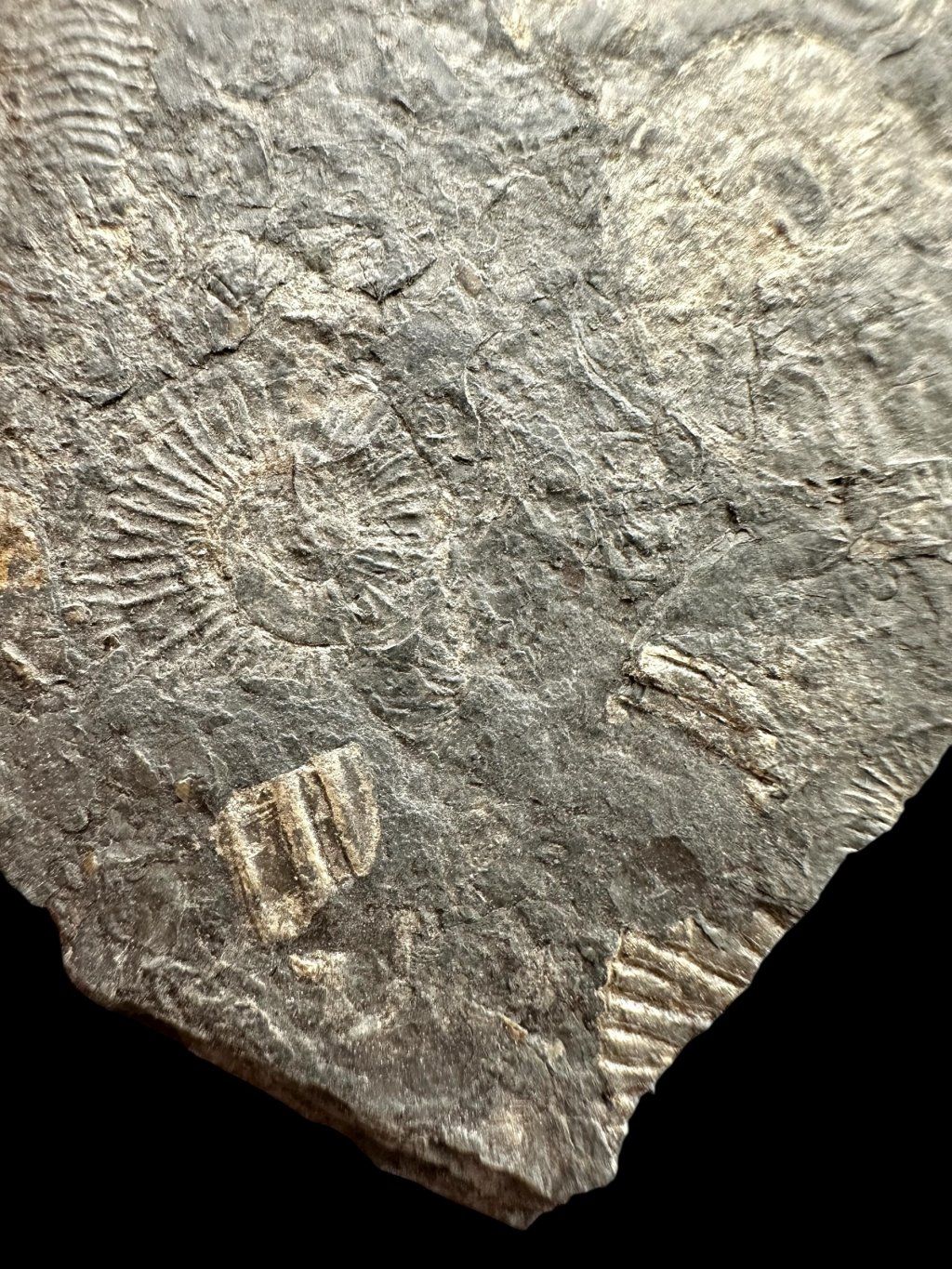
Ammonite Dactylioceras – Holzmaden, Germany
Locality: Holzmaden, Germany
Formation: Jurassic
Age: approx. 180 million years
Weight: 28,3g
Dimensions: 5,5 x 5,3 x 1 cm
Dimensions of the largest ammonite: 1,6 x 1,3 cm
| Category: | Germany |
|---|


Free gift
For order over 50 $

Shipping within 2 working days

Ammonite Dactylioceras from the Holzmaden locality
Dactylioceras is an extinct genus of marine cephalopods from the Lower Jurassic, which belongs among well-known and sought-after ammonites from the German locality of Holzmaden. This area in southwestern Germany is famous for exceptionally well-preserved fossils deposited in dark clay shales known as Posidonia Shale. These sediments formed approximately 183 million years ago, when a large part of present-day Central Europe was covered by sea.
Shell characteristics
The ammonite Dactylioceras is typical for its spirally coiled shell, which usually has a flat disc-shaped form. The surface of the shell is decorated with pronounced radial ribbing, with individual ribs often branching toward the outer edge. This feature is highly characteristic of the genus Dactylioceras and allows relatively easy identification. The shell size is usually several centimetres, most commonly between three and ten centimetres.
Way of life
Dactylioceras was a marine cephalopod, related to modern octopuses, cuttlefish and nautiluses. The animal inhabited the last chamber of its shell, while the inner chambers served to regulate buoyancy. It probably moved by jet propulsion and lived in the open sea. Its diet consisted of small marine organisms such as crustaceans, larvae and other invertebrates. In the Jurassic sea it represented a common part of the marine ecosystem.
Fossilization in the Holzmaden locality
Fossils from the Holzmaden locality are valued for their exceptional state of preservation. The dark shales formed in an environment with very low oxygen levels on the sea floor, which significantly slowed the decomposition of dead organisms. As a result, ammonite shells are often preserved in very good condition and sometimes even with fine details. Some specimens may also be mineralized with pyrite, giving them a striking metallic golden appearance.