
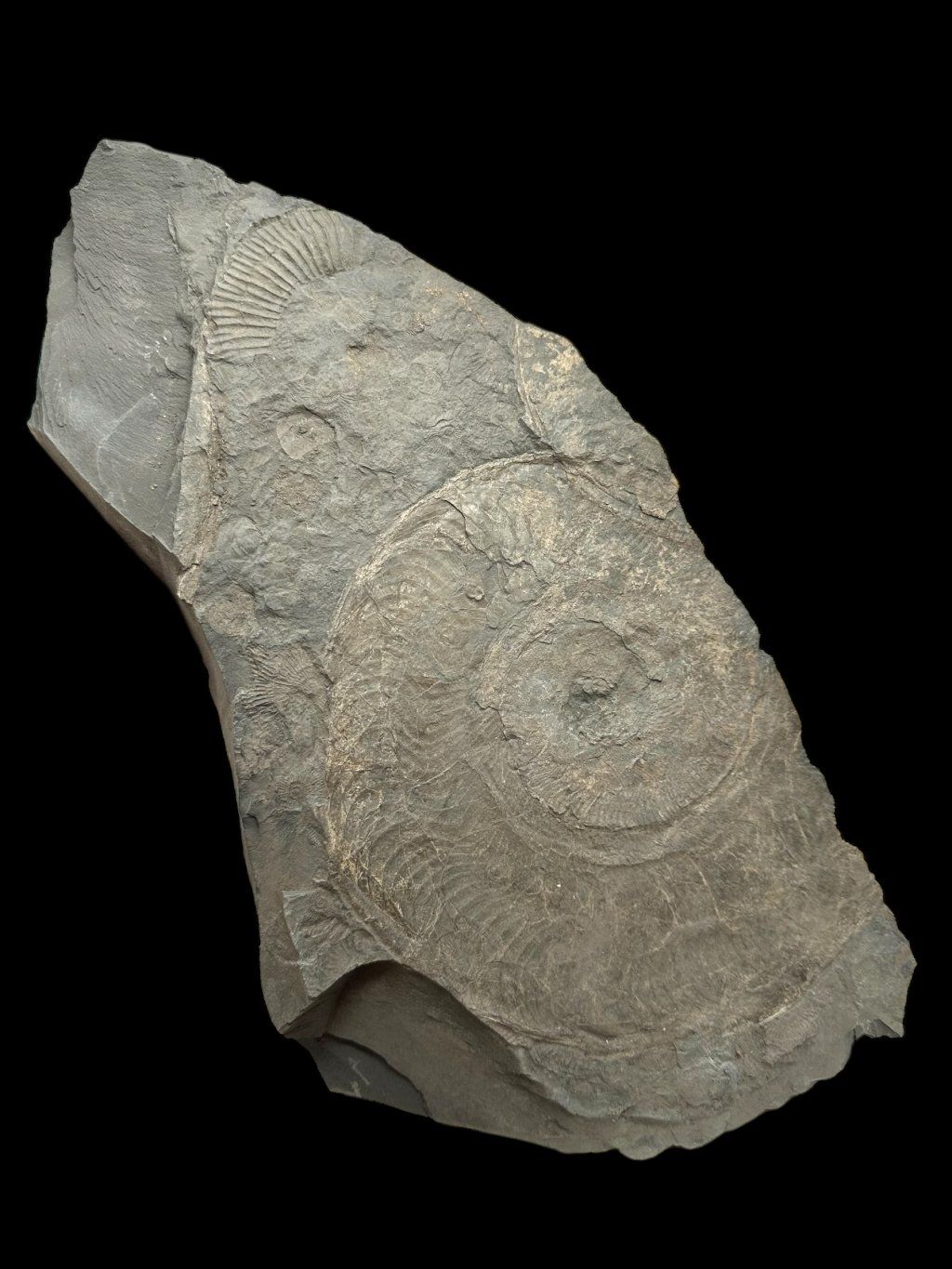
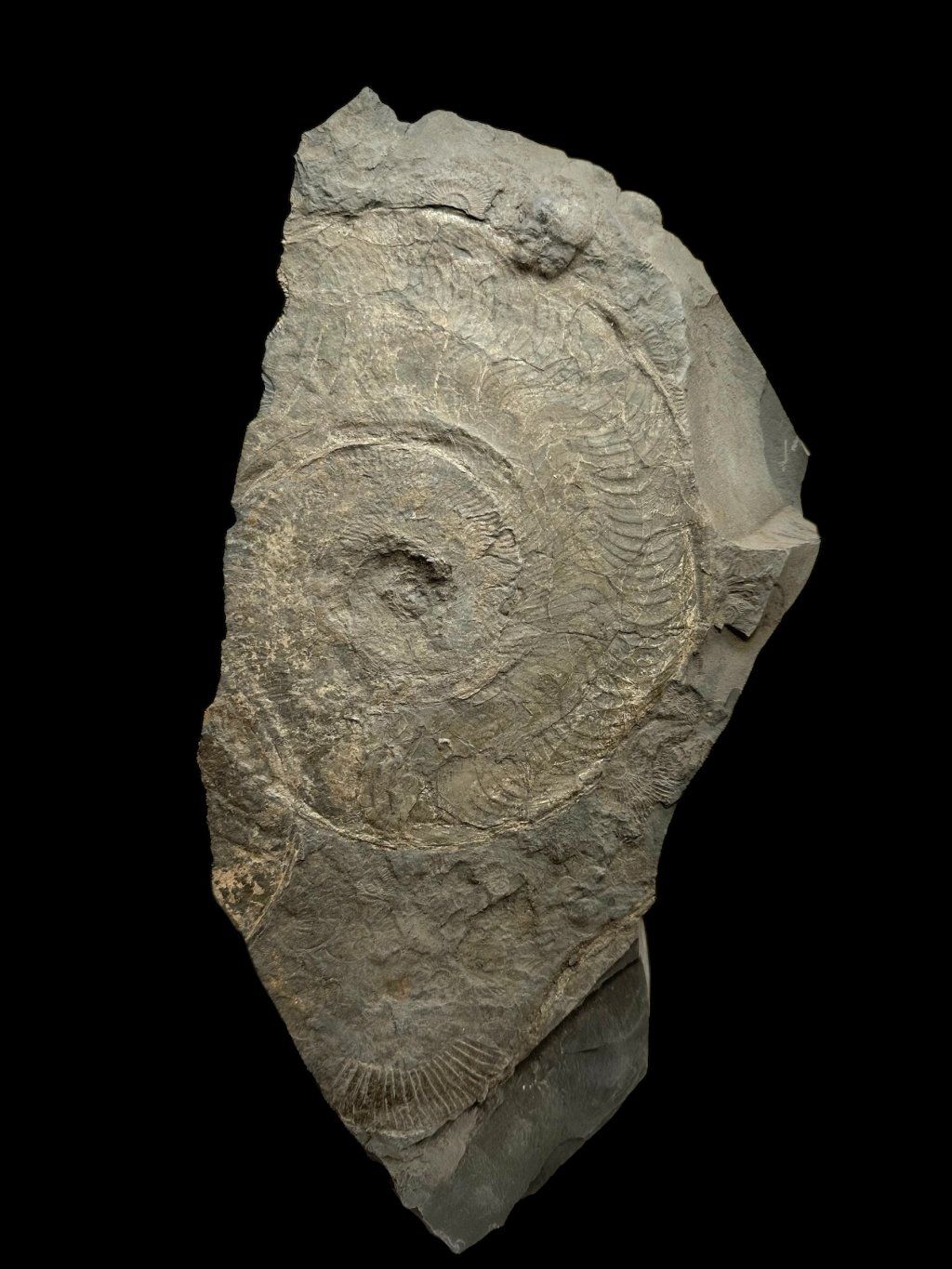
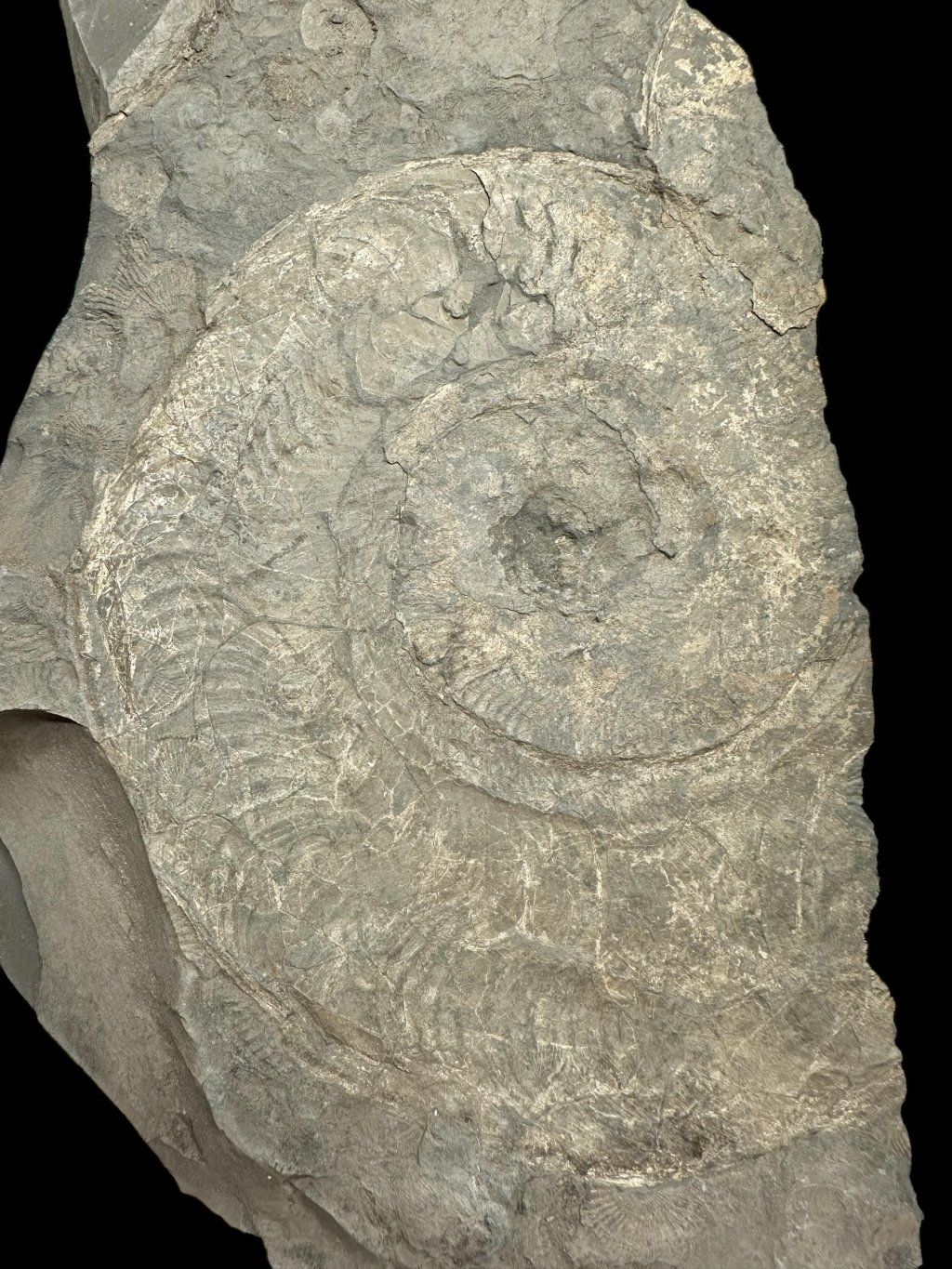
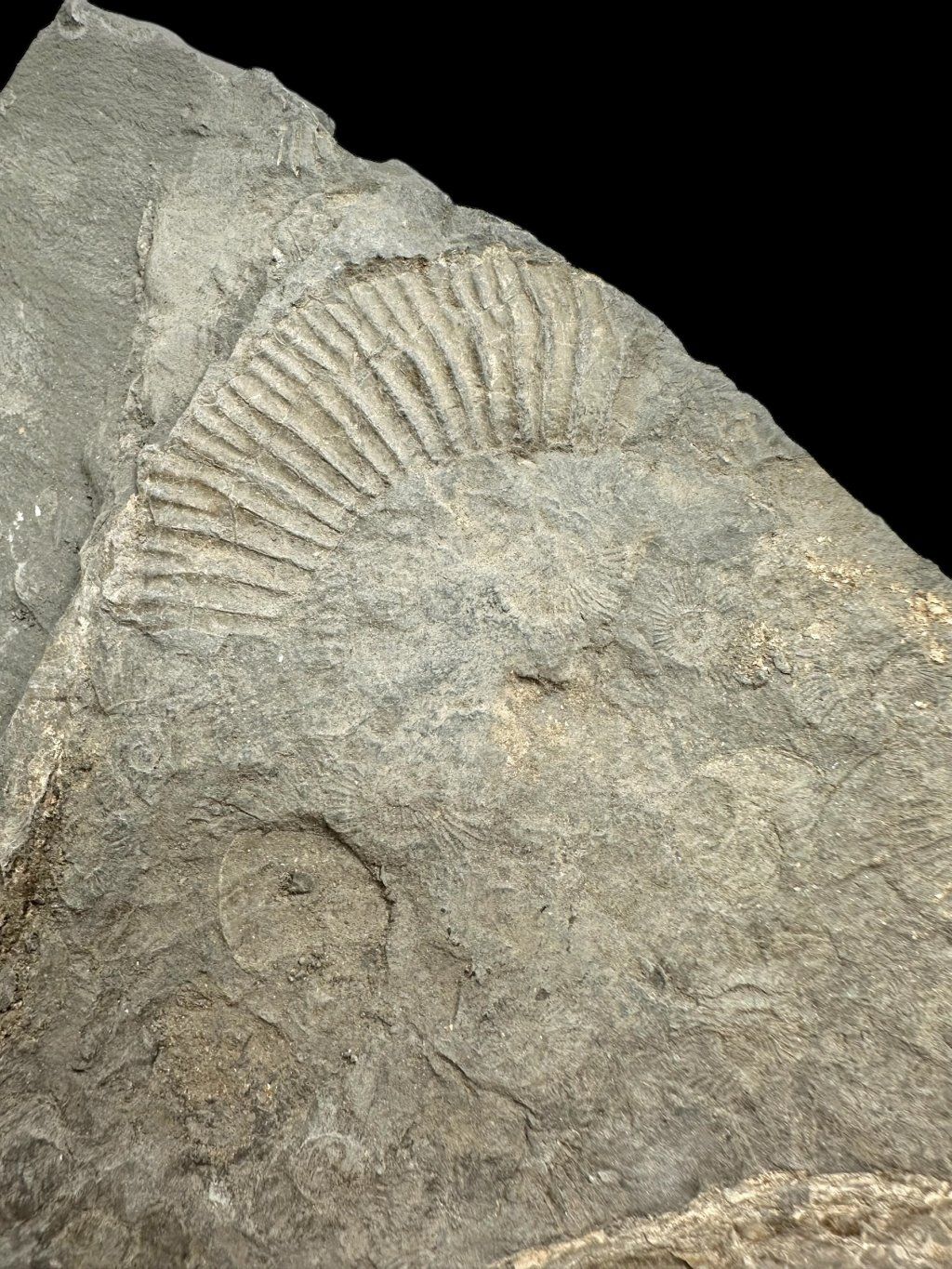
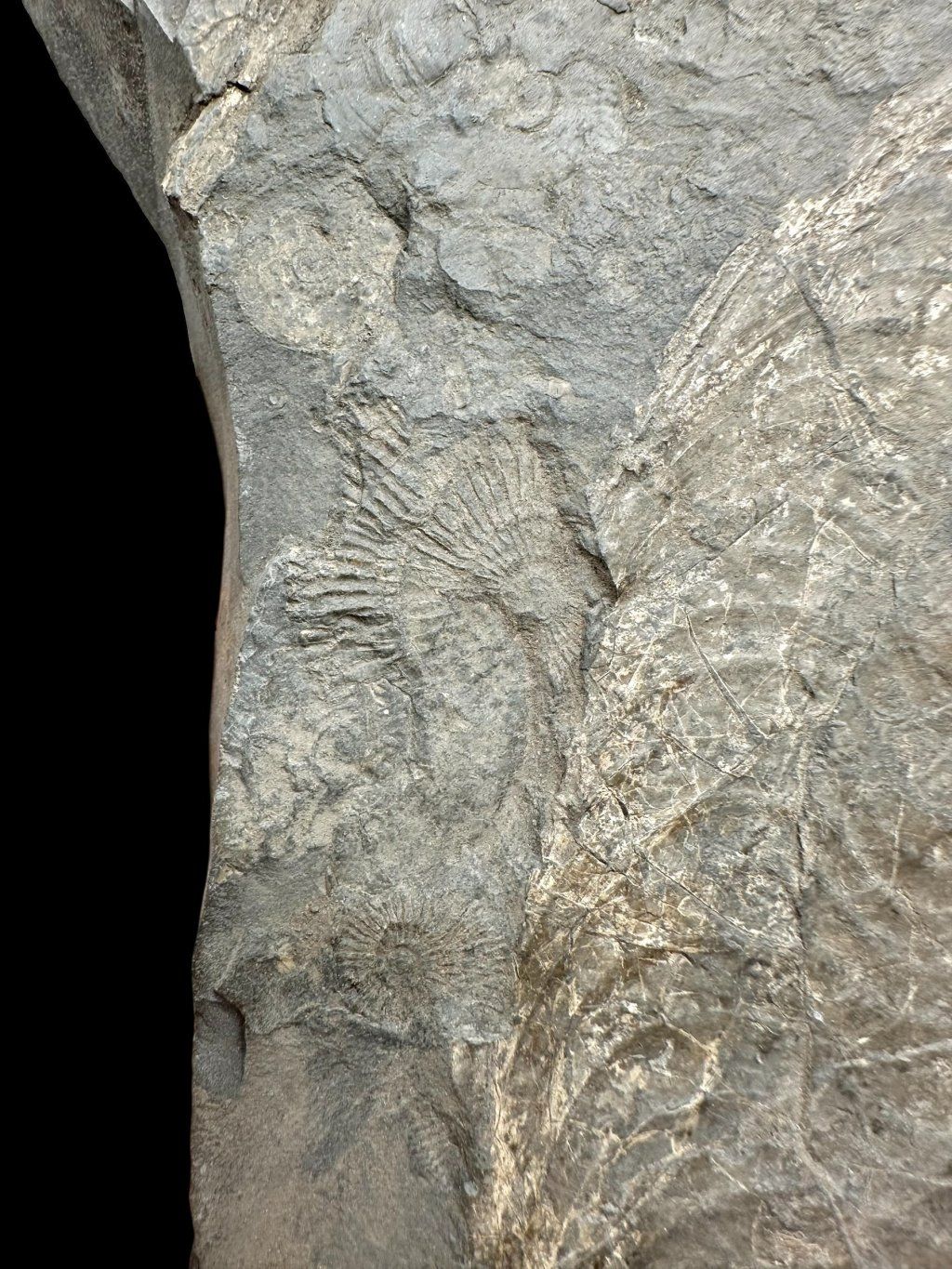
Harpoceras ammonite with smaller Dactylioceras ammonites – Holzmaden, Germany
Locality: Holzmaden, Germany
Formation: Jurassic
Age: approx. 180 million years
Weight: 1560g
Dimensions: 37,5 x 19,5 x 3,5 cm
Dimensions of the largest ammonite: 20 x 15,5 cm
| Category: | Germany |
|---|


Free gift
For order over 50 $

Shipping within 2 working days

Ammonites from the Holzmaden locality
Harpoceras ammonite
Harpoceras is an extinct genus of Jurassic ammonites from the Lower Jurassic, which lived approximately 183 million years ago. These ammonites belong among typical fossils of Jurassic seas and are often found in the German locality of Holzmaden. The shell of the genus Harpoceras is usually flat and disc-shaped, with a relatively smooth surface and a distinctive sharp keel along the outer edge of the shell. Unlike the strongly ribbed ammonites of the genus Dactylioceras, Harpoceras has finer ornamentation, giving it a characteristic slender appearance. These ammonites can therefore be relatively easily recognized by their smoother flanks and prominent keel.
Dactylioceras ammonite
Dactylioceras is an extinct genus of marine cephalopods from the Lower Jurassic, which belongs among well-known and sought-after ammonites from the German locality of Holzmaden. This area in southwestern Germany is famous for exceptionally well-preserved fossils deposited in dark clay shales known as Posidonia Shale. These sediments formed approximately 183 million years ago, when a large part of present-day Central Europe was covered by sea.
Fossilization in the Holzmaden locality
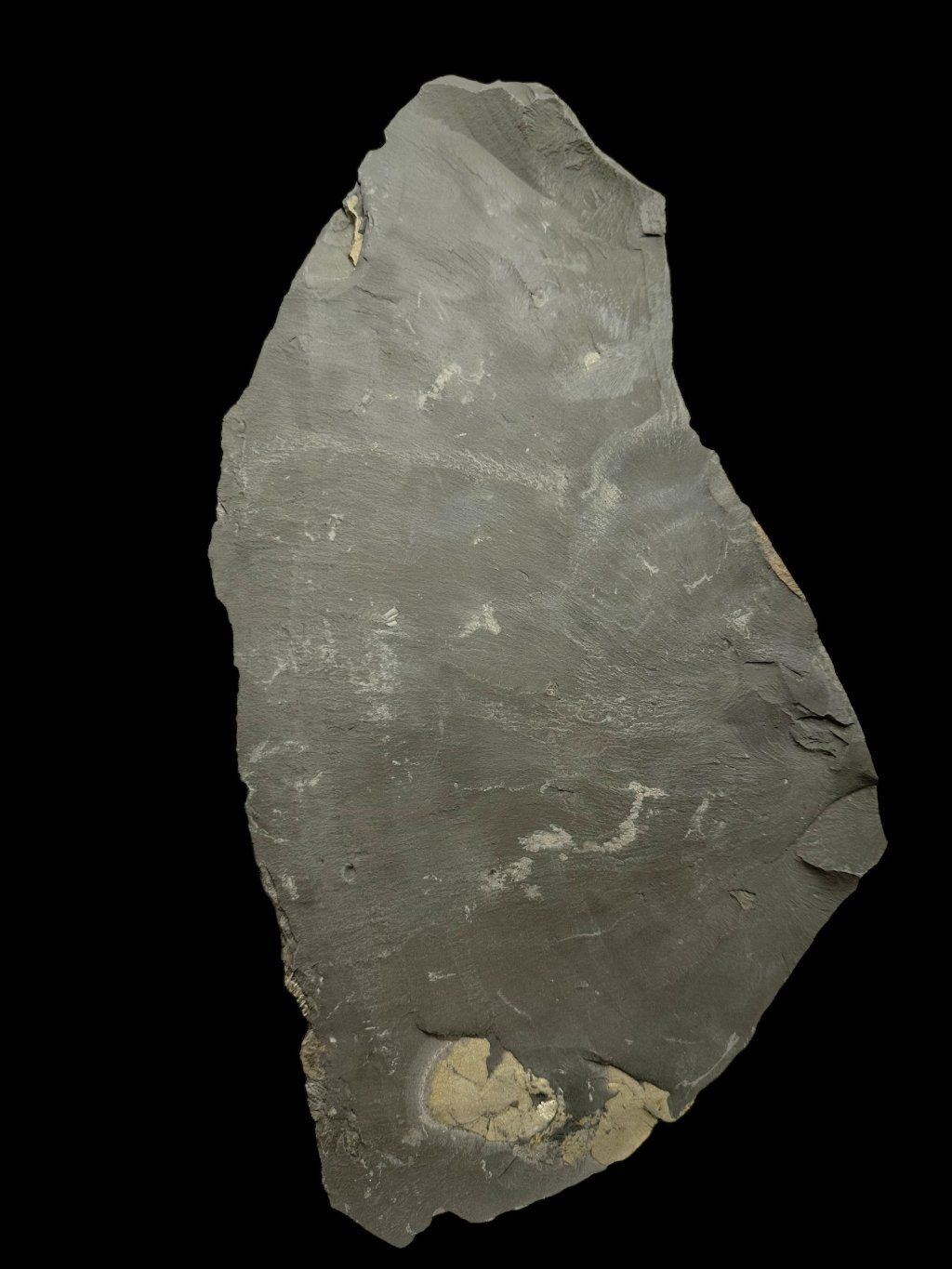
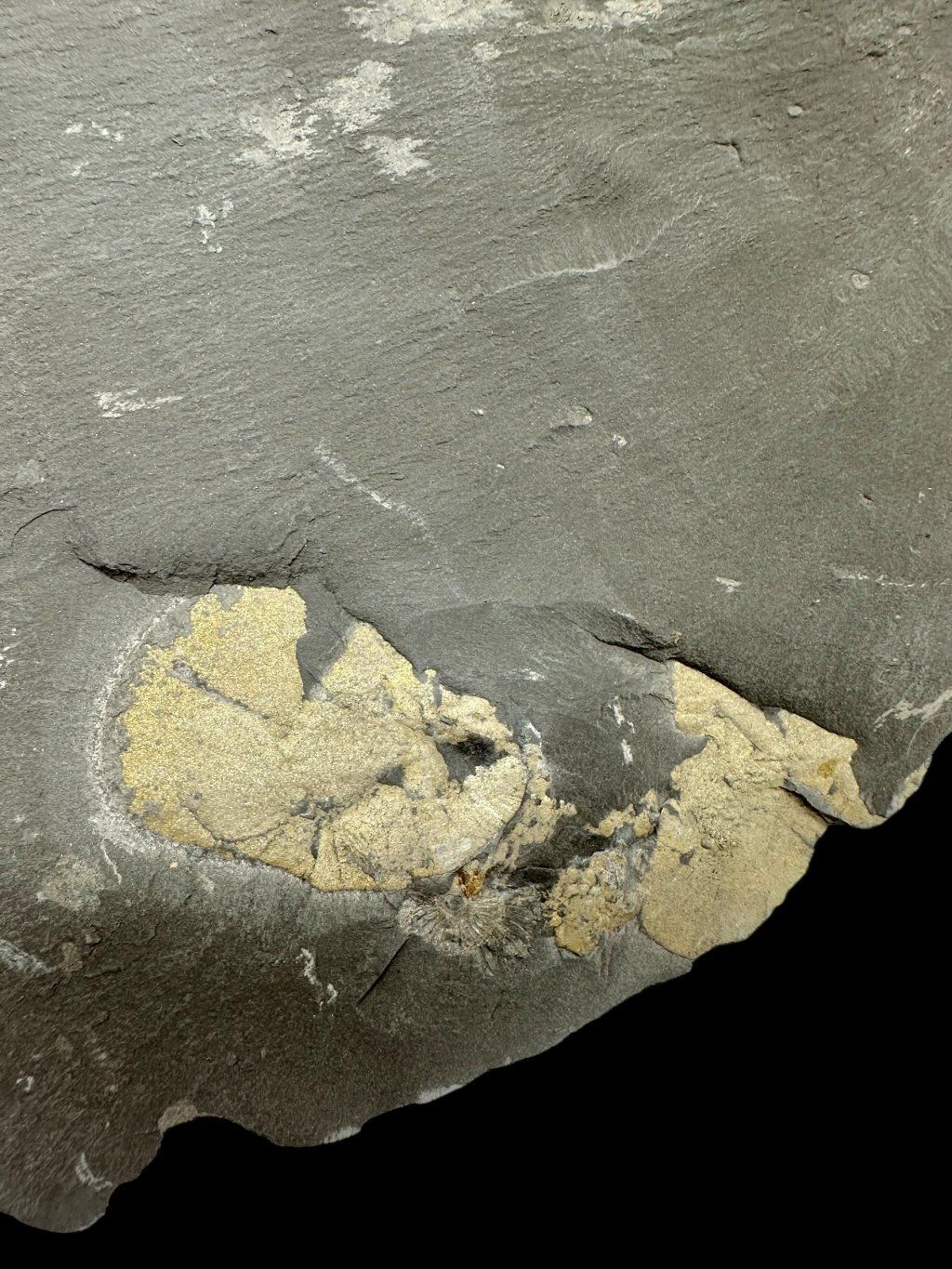
Fossils from the Holzmaden locality are valued for their exceptional state of preservation. The dark shales formed in an environment with very low oxygen levels on the sea floor, which significantly slowed the decomposition of dead organisms. As a result, ammonite shells are often preserved in very good condition and sometimes even with fine details. Some specimens may also be mineralized with pyrite, giving them a striking metallic golden appearance.