
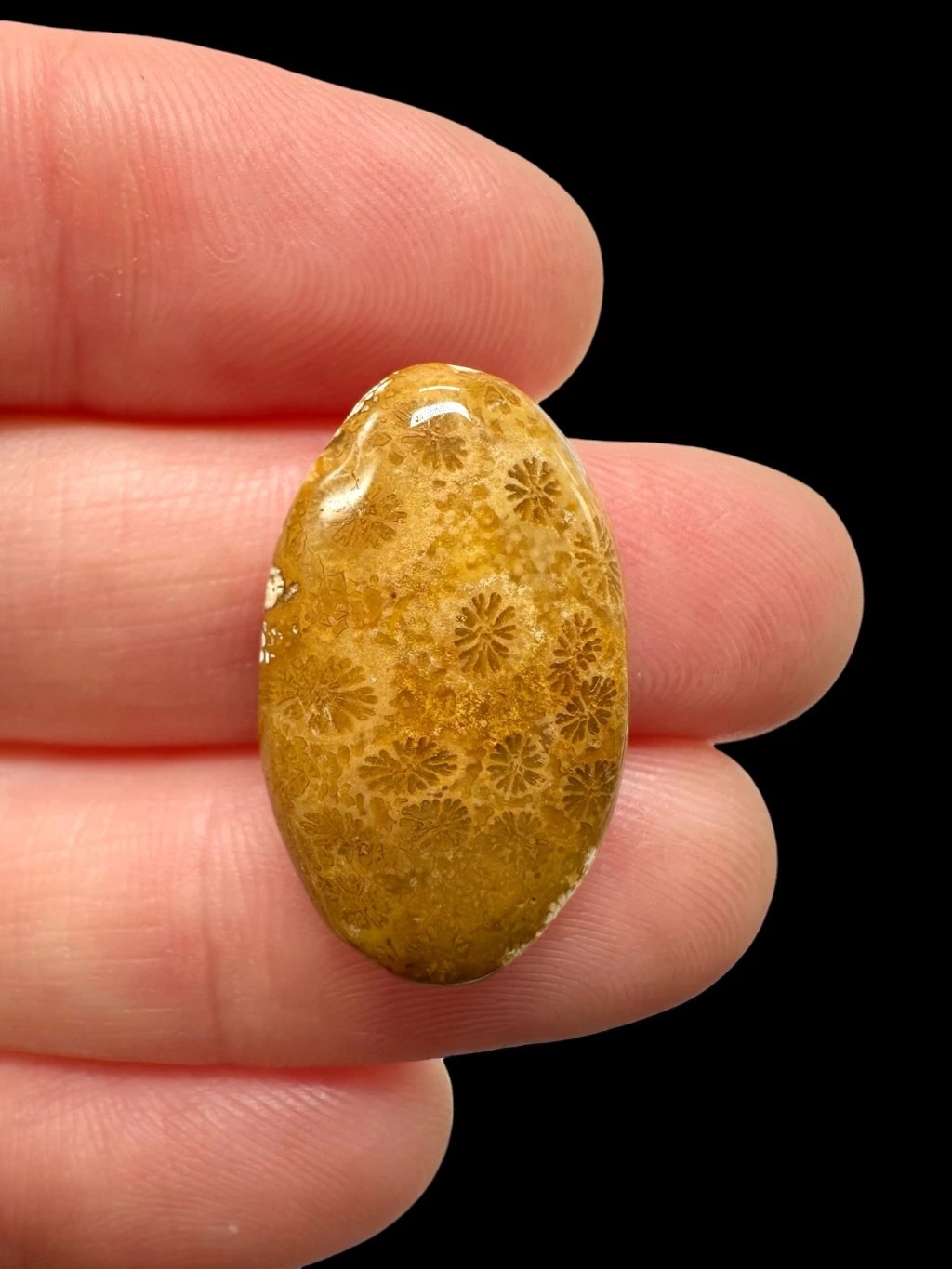
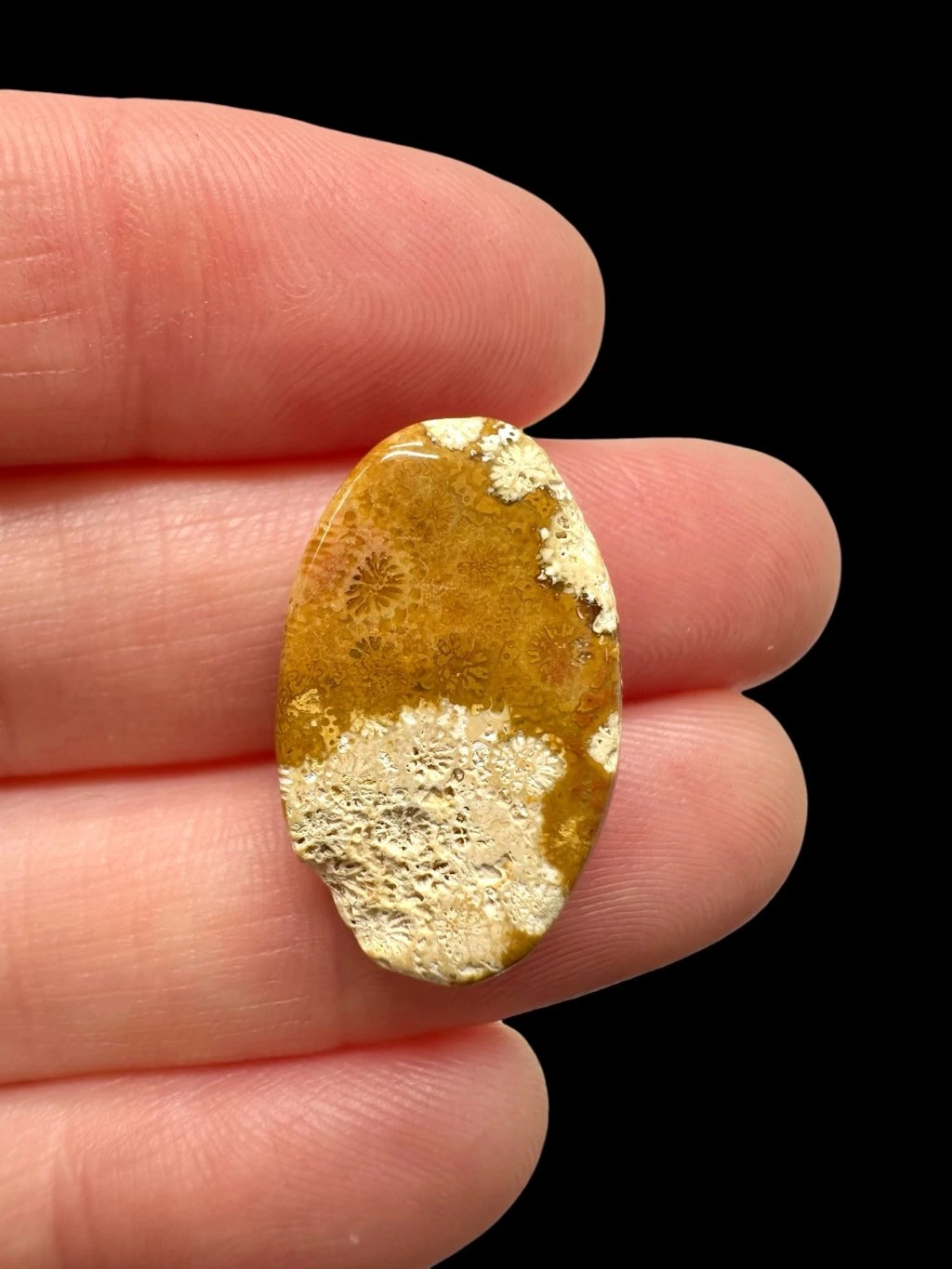
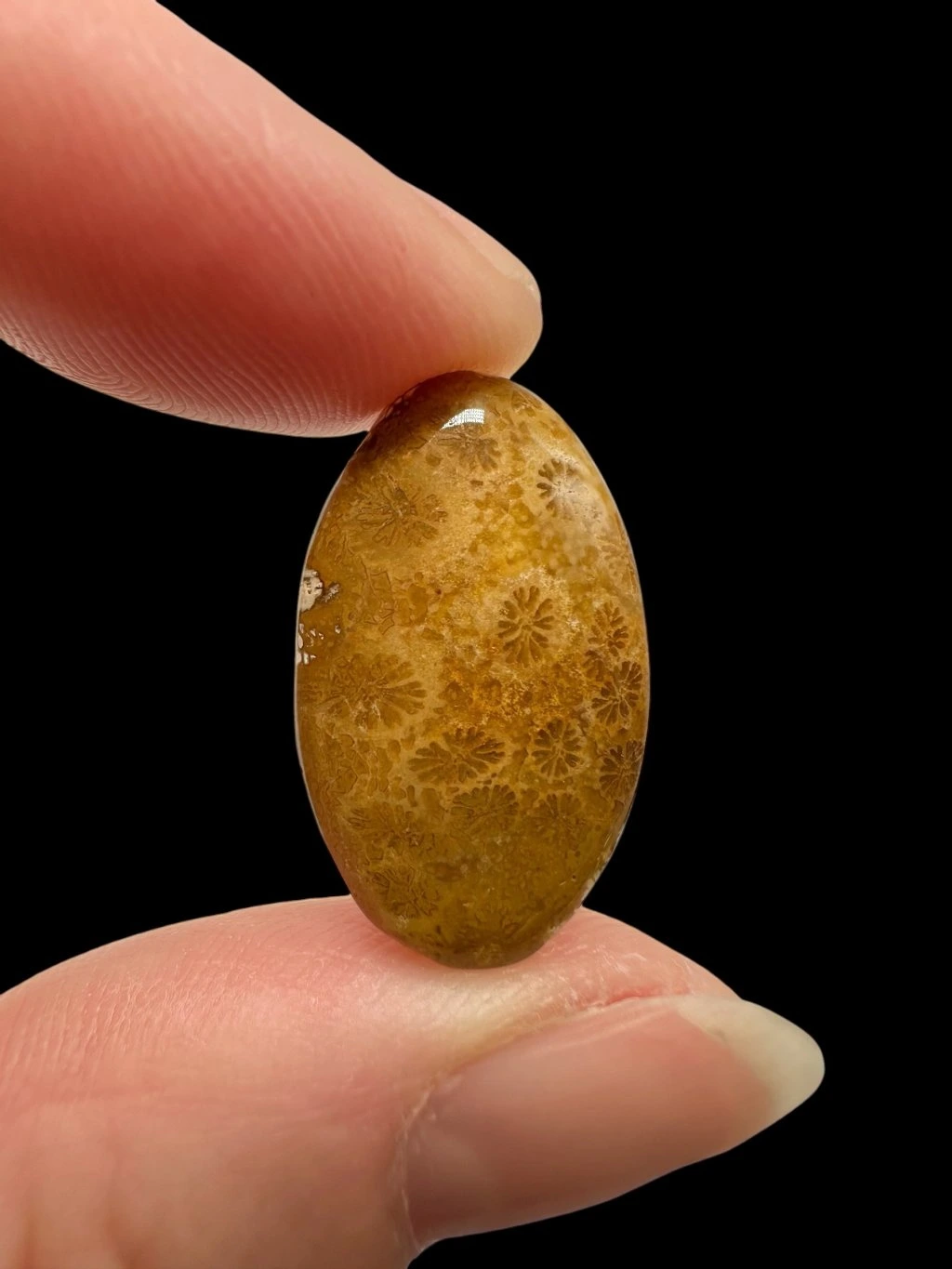
Fossil coral cabochon – Indonesia
Locality: Indonesia
Weight: 2,5g
Dimensions: 2,3 x 1,3 x 0,5 m
| Category: | Fossil coral |
|---|


Free gift
For order over 50 $

Shipping within 2 working days

Fossil coral cabochon – Indonesia
Fossil coral is a petrified remnant of ancient coral colonies that were gradually replaced by mineral matter over millions of years, most commonly quartz. This process preserved the original coral structure, which is clearly visible in the form of typical cellular or floral patterns. Fossil corals from Indonesia are known for their distinctive patterns and contrasting color combinations, most often in shades of beige, brown, gray or black.
Cabochon and its use in jewelry
A cabochon represents a method of stone processing without facets, where the surface is smooth, rounded and polished. This type of cut highlights the natural structure and pattern of fossil coral, which is characteristic of this material. Fossil coral in cabochon form is used in jewelry as well as a decorative object.
Formation of fossil coral
Fossil coral formed through the process of fossilization, where the original organic structure of corals was gradually replaced by minerals. Most commonly, silicification occurs, meaning replacement by silica. This process took place in a marine environment over millions of years and preserved the detailed internal structure of the original organism.
Fossil coral deposits
Indonesia is one of the most important sources of fossil coral, where material suitable for jewelry processing is found. Other occurrences are known from the USA (Florida), Thailand or Australia. Indonesian fossil corals are valued mainly for their quality pattern and contrast.
Properties and characteristics
Fossil coral is a solid material with a hardness of approximately 6.5–7 on the Mohs scale, making it suitable for processing and everyday wear. It has a compact structure, often with a pronounced pattern resembling flowers or cells. When polished, it achieves a smooth luster and retains its characteristic natural appearance.