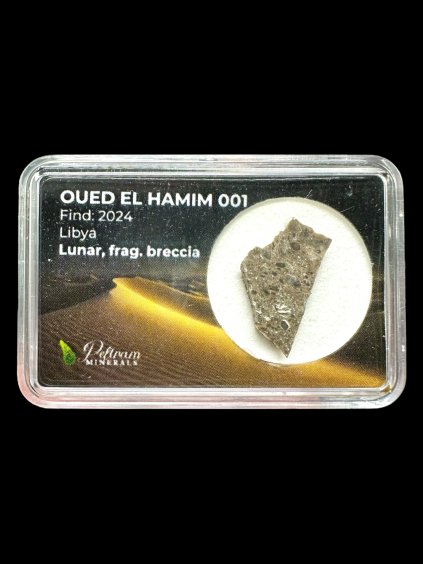
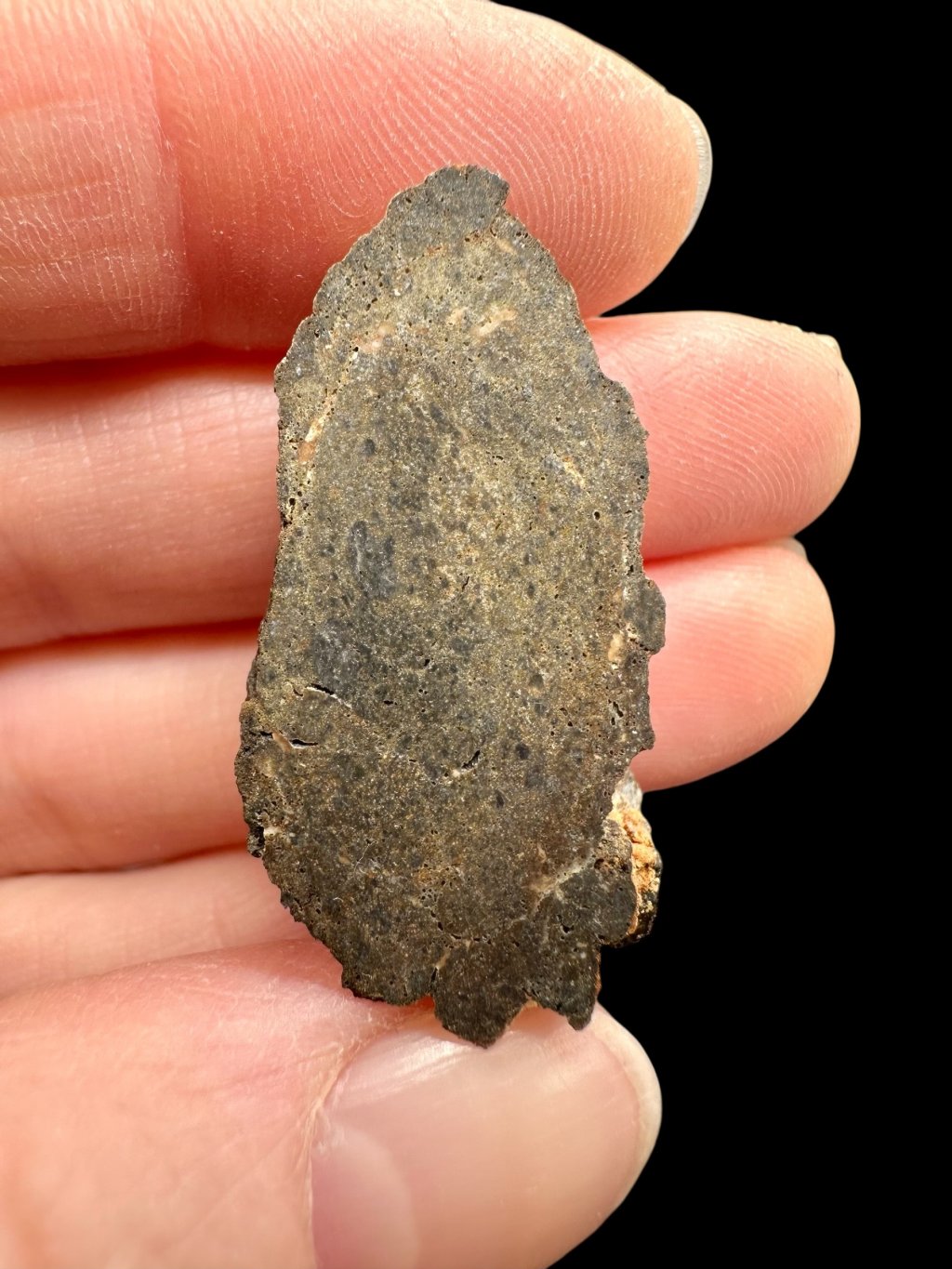
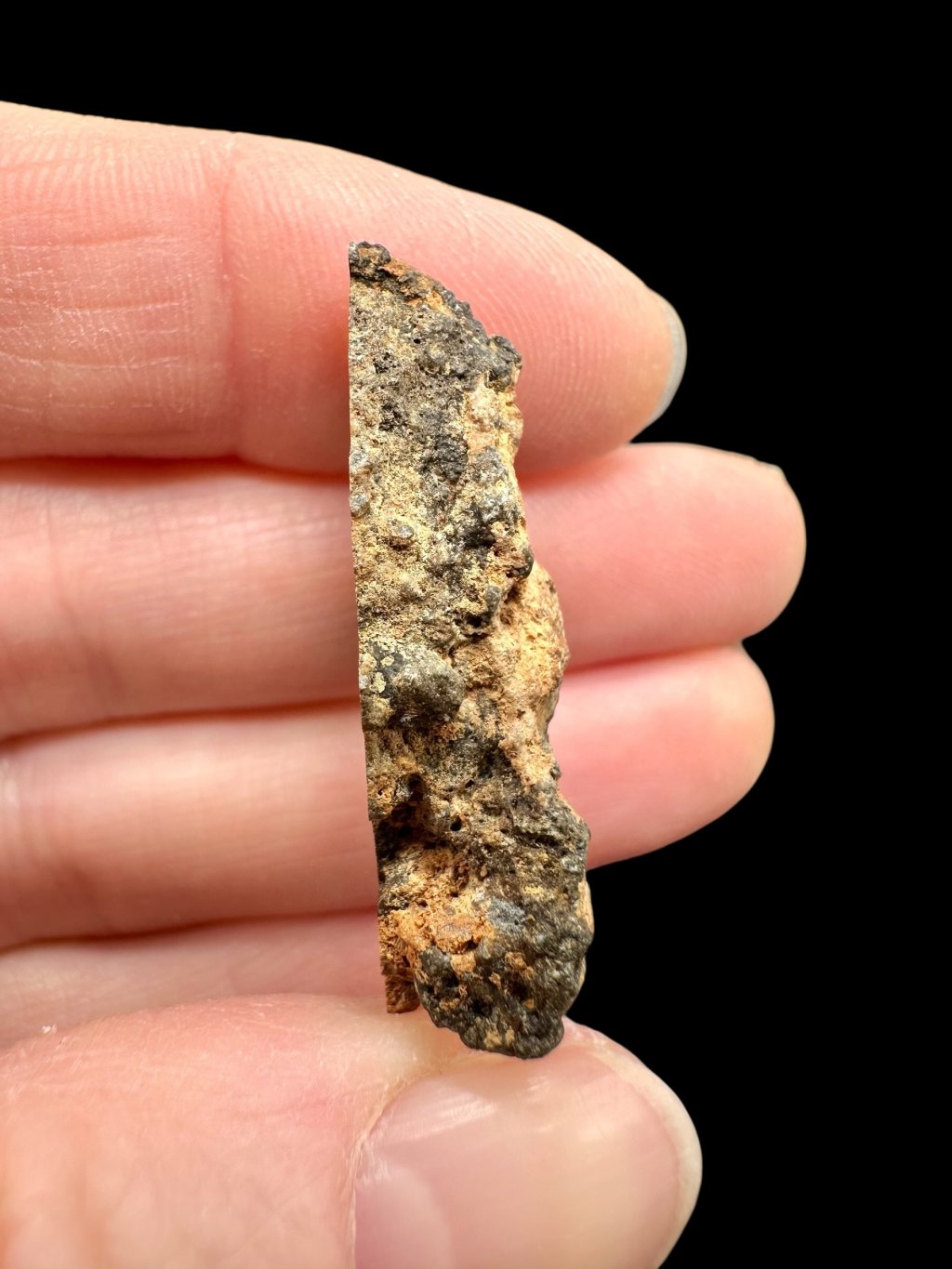
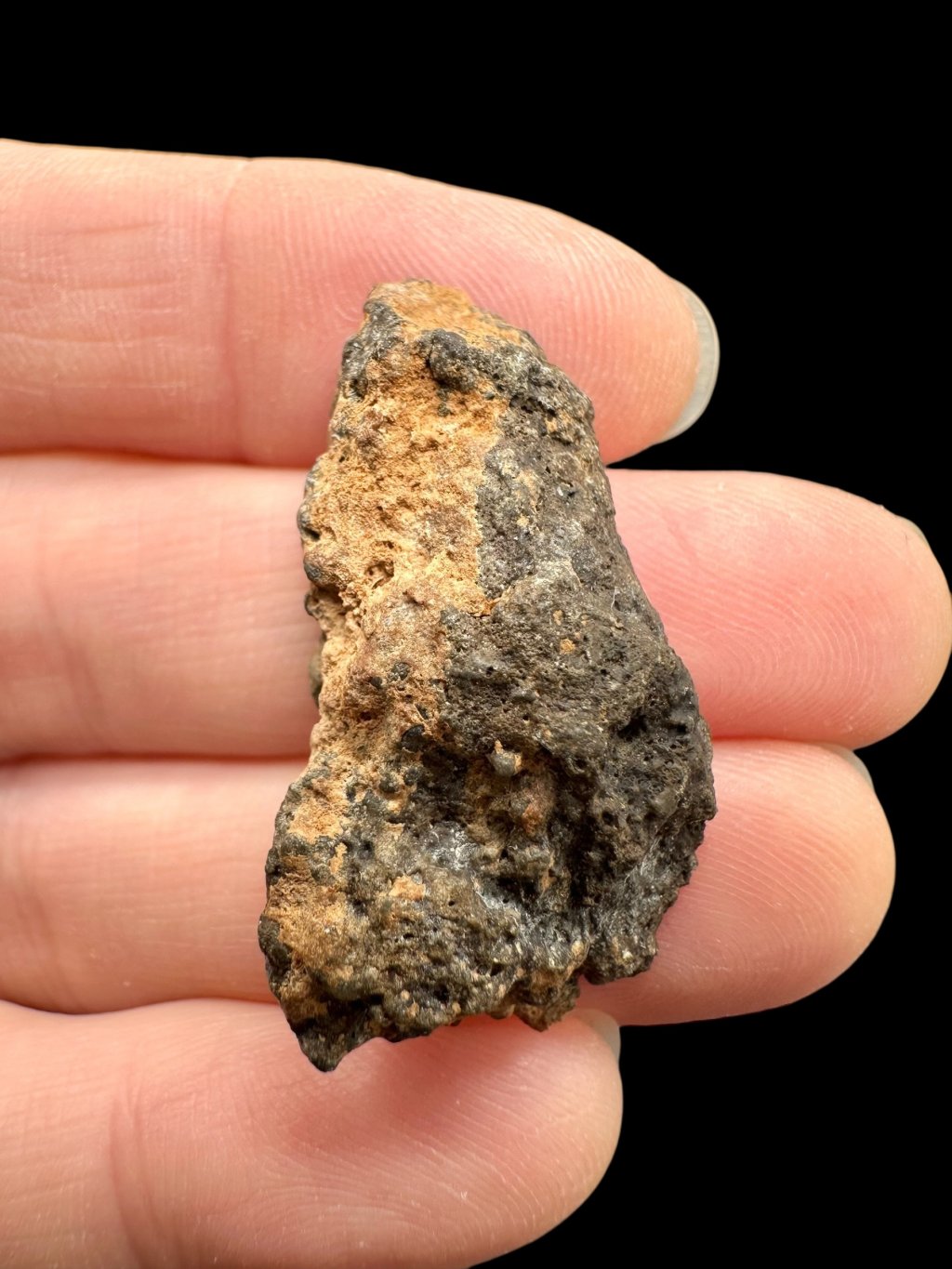
Lunar meteorite Ash Shaqqah 002 – 5,9g – Libya
Type: Lunar / troctolitic anorthosite
Locality: Libya
Weight: 5,9g
Dimensions: 33 x 16 x 8 mm
Year found: 2024
Total known weight: 329 kg
Surface treatment: Endcut
| Category: | Ash Shaqqah 002 |
|---|---|
| ? Type: | Stony |
| Subspecies: | Achondrite |
| ? Surface treatment: | Cut |
| Packaging: | None |
| ? Origin: | Moon |


Free gift
For order over 50 $

Shipping within 2 working days

Ash Shaqqah 002 – One of the largest known lunar meteorites in the world
Ash Shaqqah 002 is a significant lunar meteorite that was found in Libya in 2024. It is not an observed fall, but a find consisting of numerous fragments scattered across the desert region of northeastern Libya near the Jaghbub Oasis. The total recovered mass is approximately 329 kilograms, placing it among the largest known lunar meteorites. The material was recovered in the form of many pieces of various sizes, ranging from small fragments to blocks weighing tens of kilograms. Such a high mass is extremely rare among lunar meteorites.
Mineralogy and structure of the lunar breccia
From a petrographic perspective, it is a brecciated troctolitic anorthosite. The dominant mineral is anorthitic plagioclase, which accounts for approximately 80% of the rock volume. Olivine is also present, along with smaller amounts of low-calcium pyroxene. The meteorite’s structure shows clear evidence of strong impact shock, typical of material ejected from the surface of the Moon during major collisions.
Origin in the lunar highlands
The chemical and mineralogical composition indicates that Ash Shaqqah 002 originates from the lunar highlands rather than from the dark basaltic mare regions. It is a rock that formed deep within the lunar crust during early magmatic processes and was later disrupted by impact events and ejected from the Moon’s surface during a large collision.
Extent of the strewn field
The largest individual fragment of Ash Shaqqah 002, weighing nearly 49 kilograms, was recovered in early November. In the following weeks, through December, additional medium-sized and small fragments were gradually discovered, increasing the total recovered mass to approximately 329 kilograms. The meteorites were dispersed across an elliptical strewn field measuring roughly 5 × 3.5 kilometers, consistent with the breakup of the body during atmospheric entry. Most of the recovered material subsequently entered major private and institutional collections, where it is preserved for further scientific research and documentation.