
Pietersite cabochon – Outjo, Namibia
Locality: Outjo, Namibia
Weight: 6,5g
Dimensions: 3,9 x 2,5 x 0,4 cm
| Category: | Pietersite |
|---|
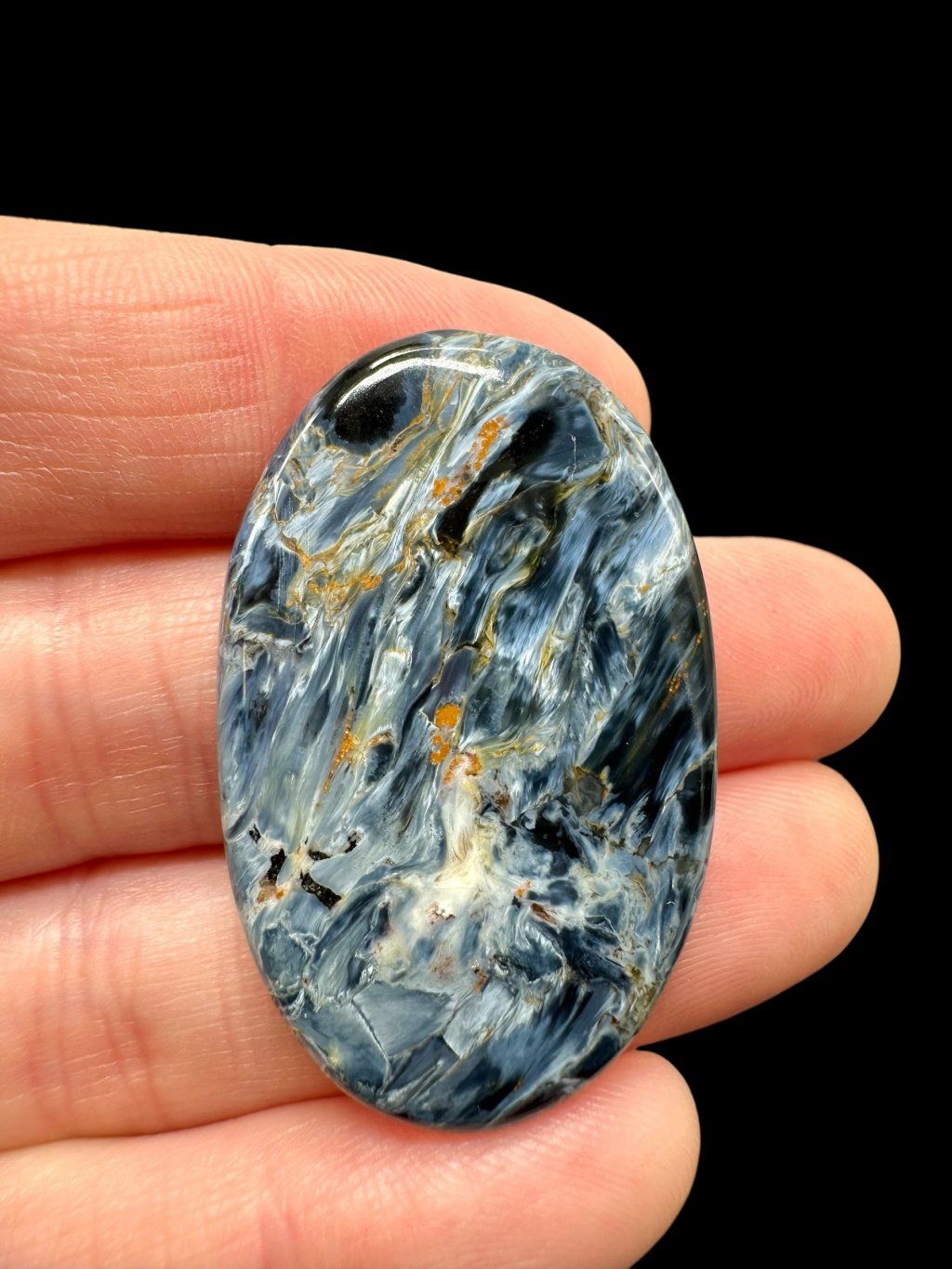
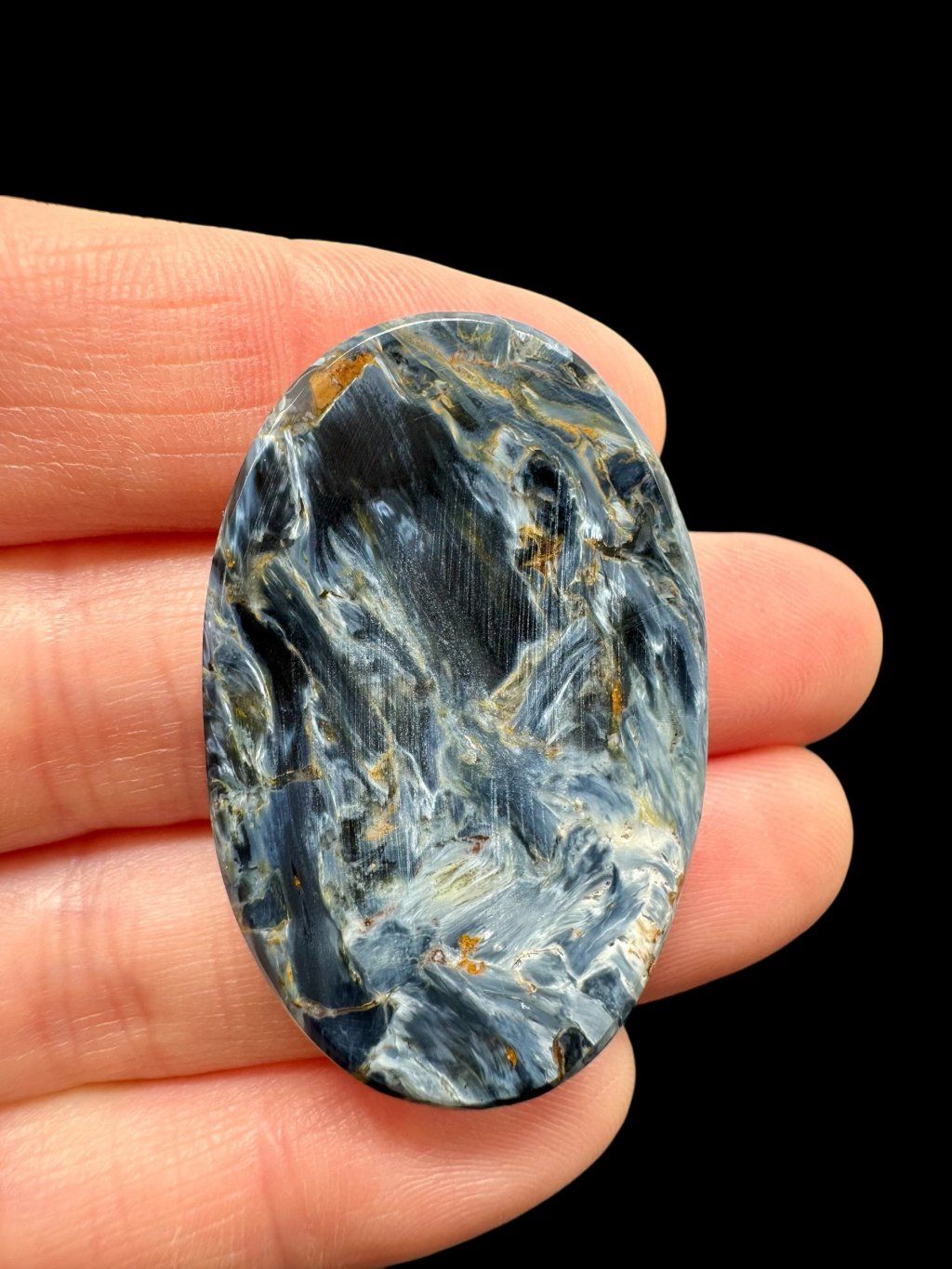
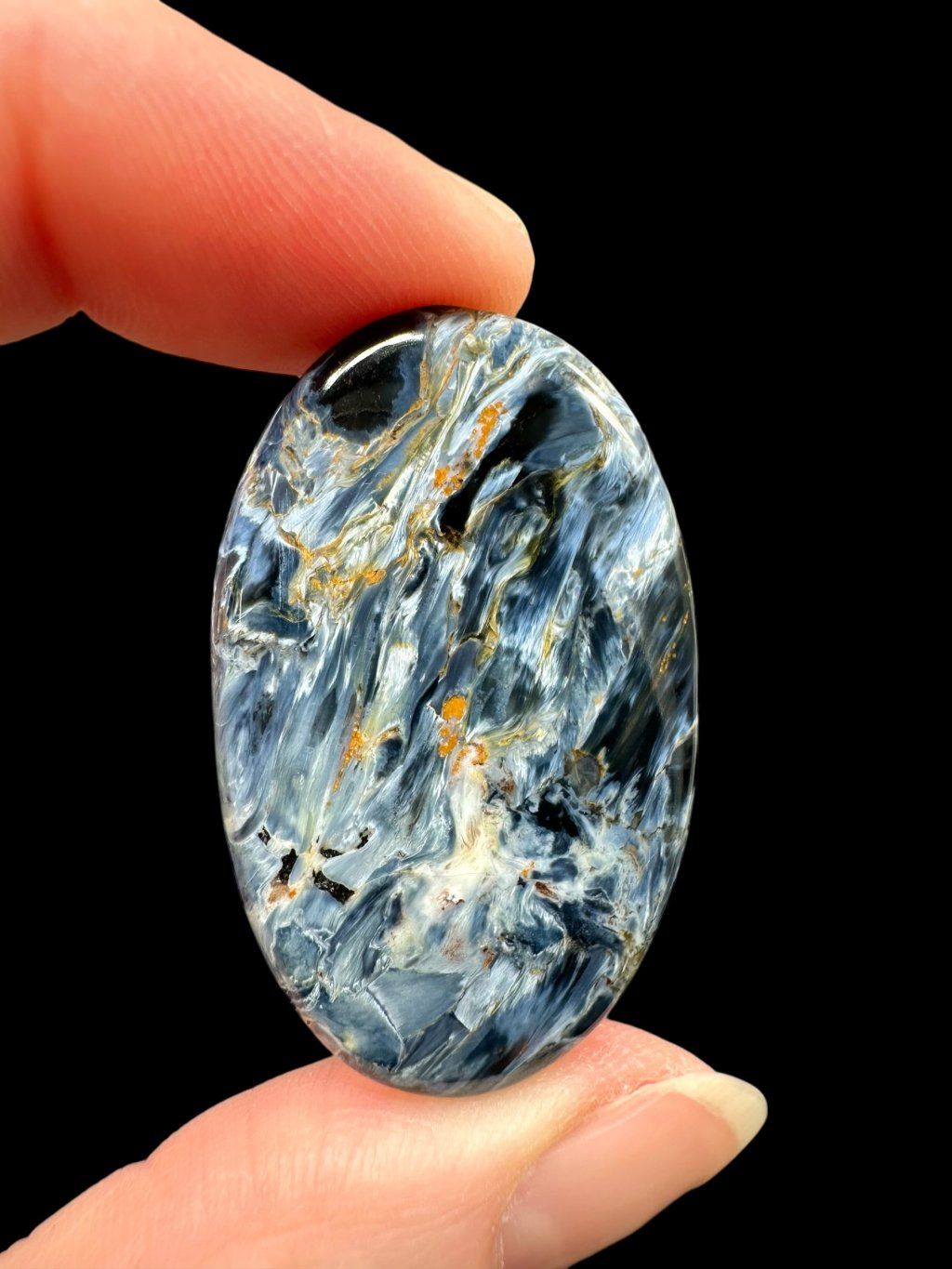


Free gift
For order over 50 $

Shipping within 2 working days

Pietersite – Quartz with a Dynamic Pattern
Pietersite is a rare variety of quartz, known for its distinctive and irregular fibrous structure. This stone forms through the transformation of fibrous minerals, especially crocidolite, which are subsequently silicified. The result is a characteristic chaotic pattern with an effect similar to tiger’s eye, often referred to as “broken” or “stormy” banding.
Appearance and Processing
Pietersite stands out with a combination of blue, golden, brown, and gray shades that blend irregularly. When exposed to light movement, it may display the chatoyance effect (cat’s eye), caused by the orientation of fibers within the stone. It is most commonly cut into cabochons, where its structure and optical effects are best highlighted.
Formation of Pietersite
Pietersite forms through a process of transformation of fibrous minerals, during which they are fractured and subsequently bound together by siliceous material. This process is similar to the formation of tiger’s eye, but the structure of pietersite is significantly more irregular and fragmented. The result is a stone with a dynamic appearance and variable pattern.
Localities of Pietersite
Pietersite was first discovered in Namibia, which remains one of the most important sources. Other deposits are found in China, where materials occur with different color characteristics. Each locality produces pietersite with slightly different patterns and coloration.
Properties and Characteristics
Pietersite has a hardness of approximately 6.5–7 on the Mohs scale, is opaque to slightly translucent, and achieves a high polish when finished. Thanks to its structure and optical effects, it is popular in jewelry as well as among collectors.