Milan Trnka
Introduction
Recently, small pieces of obsidian with atypical surface sculpture, found in the Zemplín region of eastern Slovakia (Western Carpathians), have appeared on the market. However, their exact location is not known to the public. The appearance of these obsidians has sparked a heated debate about whether their surface is a creation of nature or was created by man. This contribution, although based on the results of research that is still ongoing, clearly indicates the natural origin of the sculpture and the specific conditions under which it was formed.
Characteristics of sculptured obsidians and their geological setting
Sculptured obsidians resemble nodules known as marekanites or Apache tears. The shape of the nodules is most often rounded; flatter shapes tend to have a distinct peripheral edge. Pieces resembling drops or even dumbbells appear more rarely. However, these are not pieces formed from melt in flight in the atmosphere as in the case of tektites, since their fluidal structure usually runs transversely to their elongation. An extraordinary feature of these nodules is their polygonal sculpture, formed by a network of deeper grooves that divide the surface into polygonally bounded segments (Fig. 1). Some obsidians are highly translucent, others only faintly translucent at the edges.
Obsidian nodules occur as nuclei enclosed in streaks of whitish mass in coarse-grained sandstone (Fig. 2). The whitish mass is usually firmly attached to the surface of obsidian. Under microscopic observation, two structurally different zones can be distinguished in whitish mass. Directly adjacent to the surface of the obsidian glass is a sharply demarcated, 0.1 – 0.3 mm thick zone with a needle-like structure and a perpendicular arrangement of needles to the obsidian surface, and behind it is a finely crystalline mass without any apparent arrangement (Fig. 3). X-ray analysis showed that the whitish mass is mainly composed of alunite, sanidine and analcime. The intrusion of obsidian into the sandstone and its subsequent alteration most likely occurred along tectonic faults. Obsidian offered on the market is cleaned nodules without alteration products.
Chemical composition of obsidians and its alteration products
Analyses of obsidians, plotted in classification diagrams for volcanic rocks (for example, IUGS chemical classification – Le Bas et al. 1986) show that these are calc-alkaline rocks of rhyolite composition with a predominance of K2O above Na2O. This is also reflected in the water content, which is usually lower than 1% in similar glasses. More translucent obsidians tend to have a relatively low content of Fe oxides, which in the analyzed obsidians in total is around 1 wt. %. The chemistry of sculptured obsidians is consistent with previously published analyses of obsidian from the Zemplín region (e.g. Kohút et al. 2021).
Obsidian glass in contact with the whitish mass is significantly depleted in Na, less in Ca and Fe compared to the inner part of the nodule but enriched in S and H2O. The whitish mass surrounding the obsidian nodules already has significant sulfur content (up to 2 wt.%). Differences in chemistry between glassy obsidian and altered zones indicate a significant redistribution of elements, especially of potassium.
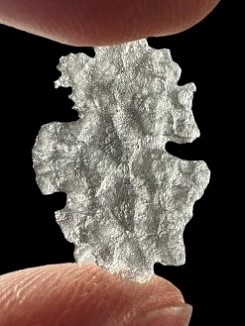
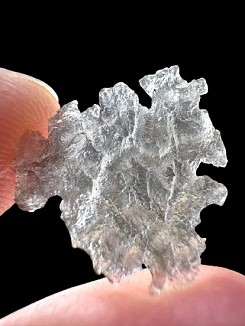
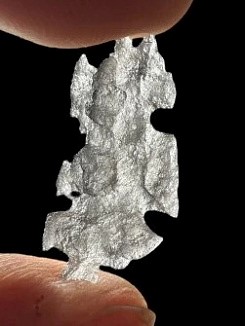
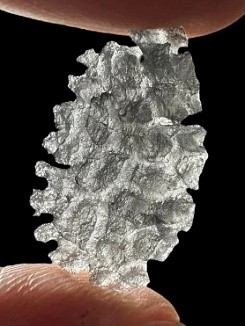
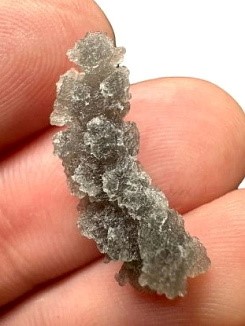
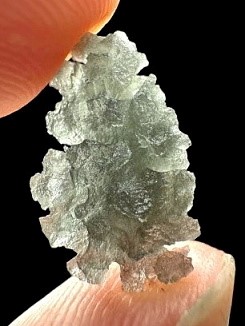
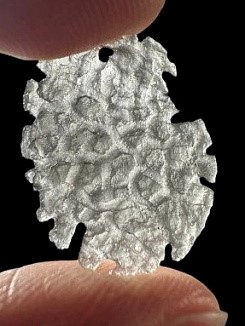
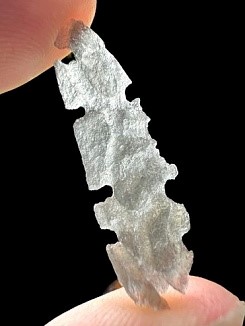
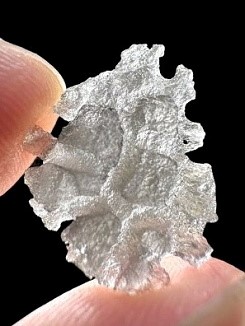
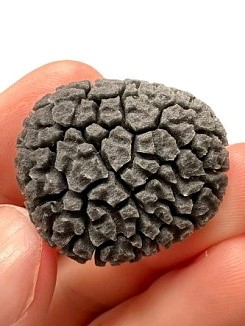
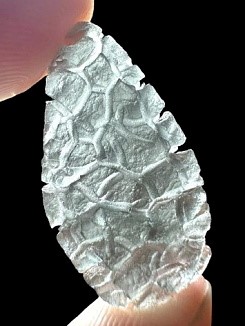
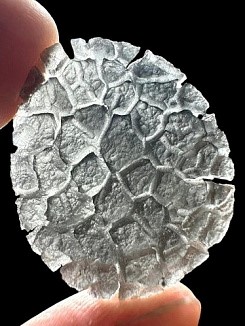
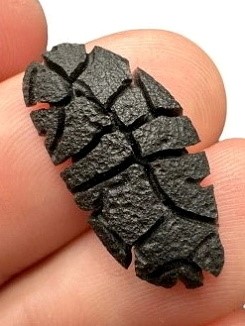
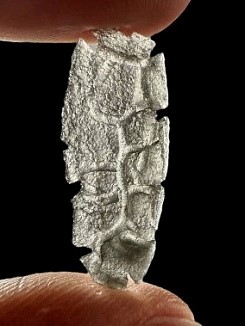
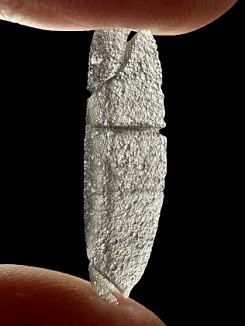
Fig. 1 – Obsidians with different character of polygonal sculpture
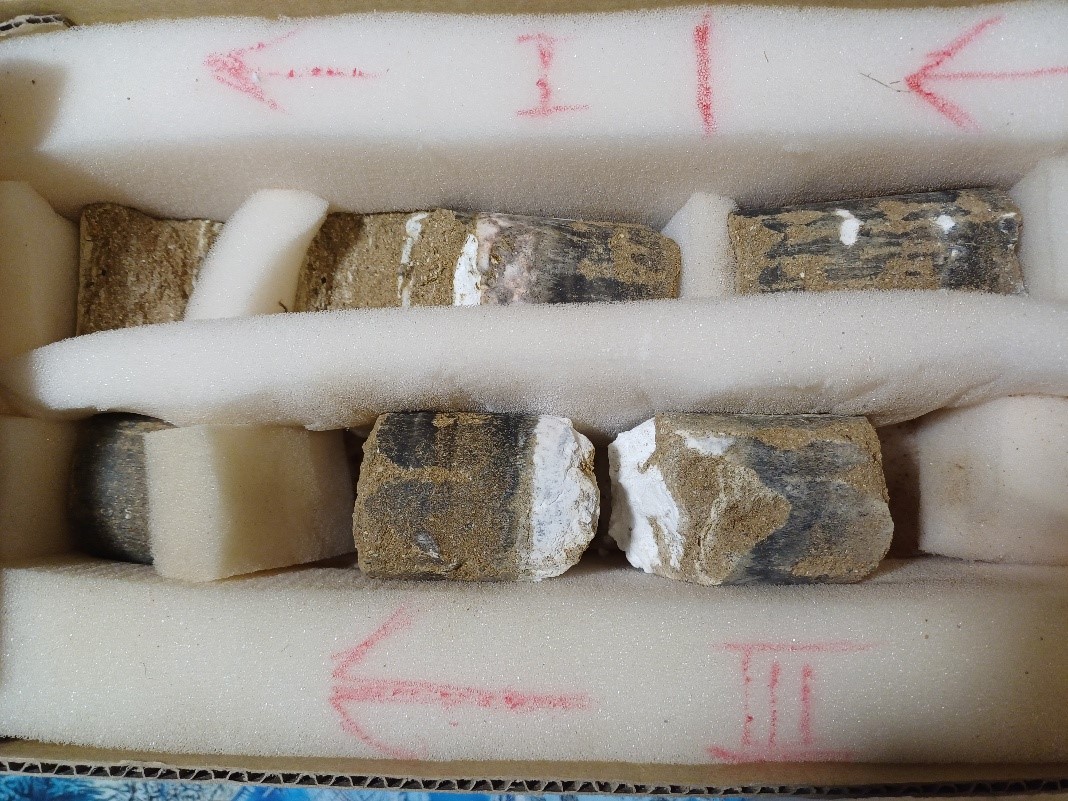
Fig. 2 – Sandstone with layers of whitish mass enclosing obsidian nodules (drill core)
The origin of polygonal obsidian sculpture
The arrangement of obsidian polygonal sculpture corresponds to the well-known consequences of the phenomenon called stress corrosion cracking. Stress corrosion cracking occurs in various materials (metals, glass, ceramics, polymers) due to the combined effect of static tensile stress and chemical activity of environment. At the beginning of corrosion cracking, small cracks are formed in the tensioned material during interaction with the environment, which, if the stress intensity exceeds the strength of the material, increase in size. The direction of crack growth is not random; they grow in such a way as to maximally reduce the stress in the material. Since tensile stress in obsidian or other type glassy bodies is manifested in a surface layer of varying thickness, the orientation of the cracks is roughly perpendicular to the surface.
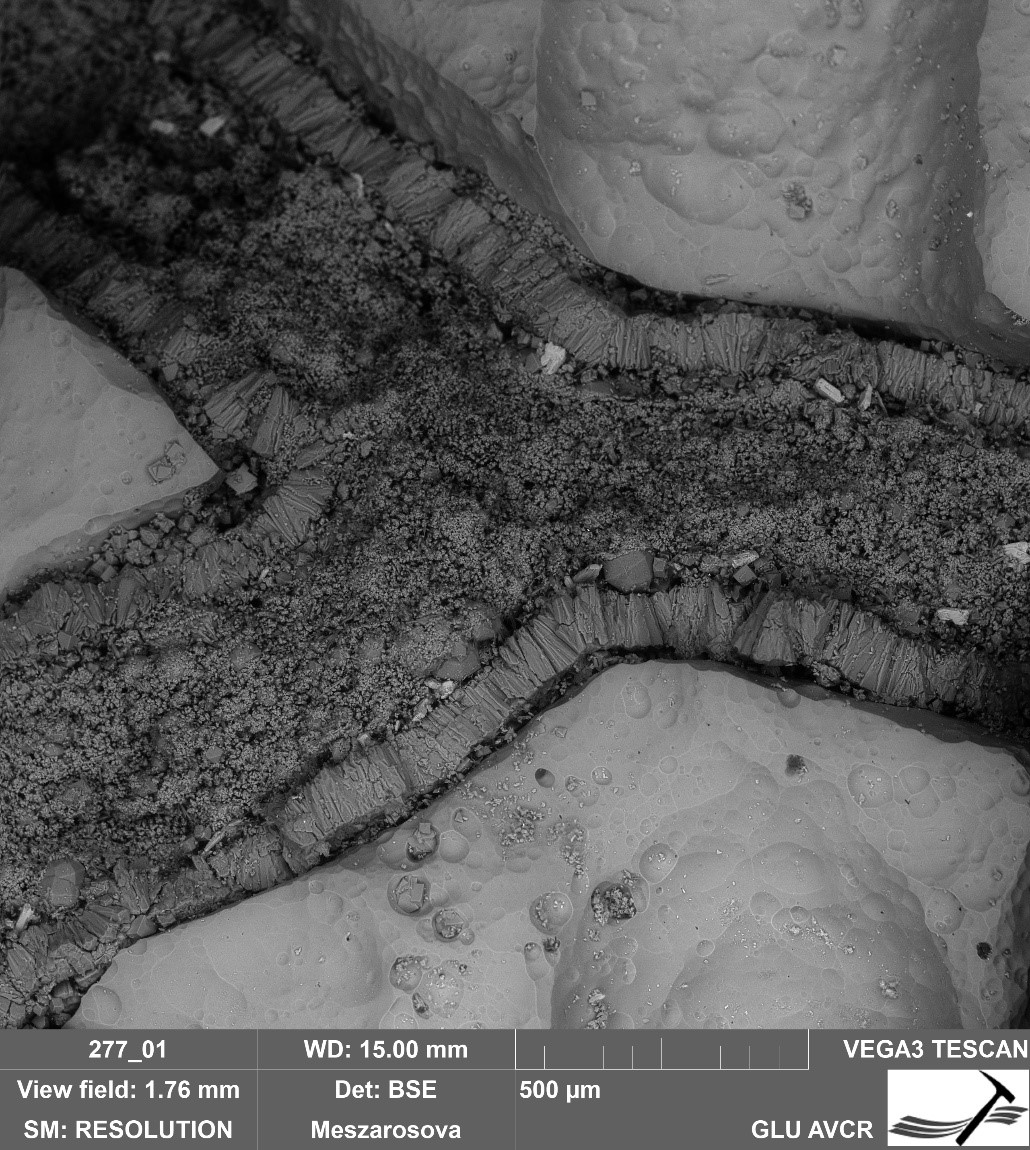
Fig. 3 – Detail of grooves on the surface of obsidian filled with products of its alteration
When corrosion and stress act together, a network of cracks develops, and the cracks themselves deepening and spread to the sides (Fig. 4). Tensile stresses are concentrated at the tip of the cracks, and the corroding solutions attack the material most intensely at this point. The stressed material dissolves and becomes brittle when bound with hydrogen (hydrogen embrittlement). Deep, sharply cut grooves form along the developing cracks, which gradually form an interconnected network on the surface and thus divide the surface into separate polygons.
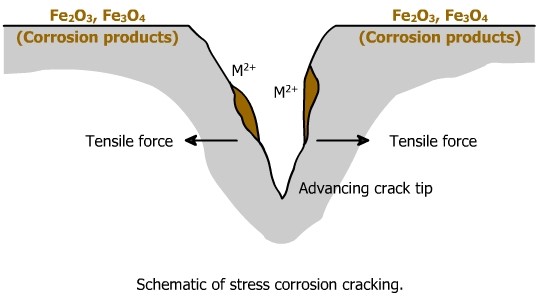
Fig. 4 - Stress corrosion cracking process on iron surface
Stress corrosion cracking in artificial materials is a well-known and widespread phenomenon but has only been described in a few cases in natural glasses. In tektites, the influence of stress on the formation and arrangement of sculpture was described by Trnka (1988). In general, however, it can be said that polygonal sculpture associated with stress corrosion cracking occurs relatively commonly in nature, although usually in less pronounced forms.
Conclusion
The research to date has shown that the obsidian nodules have a rhyolite composition. Their polygonal sculpturing shows evident geometric features of stress corrosion cracking, resulting in selective glass transformation along the cracks. Alteration of obsidian glass produces a whitish, zonally arranged mass composed mainly of alunite, sanidine and analcime. The co-occurrence of these minerals in the altered products indicates that the glass transformation and the formation of the sculpturing occurred under the influence of a post-volcanic hydrothermal sulfur-rich fluid phase at temperatures of 150–300 C.
Literature
Kohút M., Westgate J. A., Pearce N. J. G., Bačo P. (2021): The Carpathian obsidians – Contribution to their FT dating and provenance (Zemplín, Slovakia).- Journal of Archaeological Science: Reports, 37, 102861, 14 p.
Le Bas, M.J., Le Maitre, R.W., Streckeisen, A. and Zanettin, B. (1986): A Chemical Classification of Volcanic Rocks Based on the Total Alkali-Silica Diagram. - Journal of Petrology, 27, 3, 745-750.
Trnka M. (1988): Notes on the origin of moldavite sculpture. - 2nd International Conference on Natural Glasses, Prague 1987 (Konta J. eds.), 261-266.