Carpathian Obsidian – Hedgehog
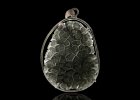
Slovak “Hedgehog” obsidian is an unusual form of natural volcanic glass from the Zemplín region of eastern Slovakia in the Western Carpathians. These small obsidian nodules are characterized primarily by their exceptionally pronounced polygonal surface sculpture, formed by a network of deep grooves dividing the surface into individual raised segments.
Individual specimens are most commonly rounded, oval or flatter in shape, while teardrop-shaped and other unusual forms occur more rarely. Some pieces are highly translucent, while others transmit light only along thin edges. Their strongly sculpted surface is the reason collectors refer to them as “Hedgehog” obsidians.
✓ Authenticity guarantee ✓ Real photos of the offered specimens ✓ Carefully selected assortment ✓ Physical store
#ShowMore#
What Makes “Hedgehog” Obsidian Special?
The most striking feature of these obsidians is their polygonal surface sculpture. Deep grooves form a network of irregular polygons on the surface, making these individual nodules distinctly different from ordinary Slovak obsidians.
Scientific research has shown that this unusual sculpture is of natural origin. Its geometry corresponds to a process known as stress corrosion cracking, during which small cracks develop in the surface layer of the glass. Under the influence of a chemically active environment, these cracks gradually deepen and widen until they form the characteristic polygonal network.
Formation of the Polygonal Sculpture
The obsidian nodules were originally enclosed in an altered whitish material within coarse-grained sandstone. Chemical and mineralogical analyses of this material revealed mainly alunite, sanidine and analcime.
Research indicates that changes to the obsidian surface occurred under the influence of post-volcanic sulfur-rich hydrothermal fluids. The estimated temperatures of this process ranged approximately between 150–300 °C. The combined effects of the chemical environment and internal stress within the glass led to selective alteration of the material along developing cracks.
Composition of the Obsidian
Chemical analyses confirm that this is genuine obsidian of rhyolitic composition belonging to the calc-alkaline series. The chemistry of these sculptured obsidians is also consistent with previously published analyses of obsidians from the Zemplín region.
More translucent specimens generally have a lower content of iron compounds. Under strong transmitted light, some pieces may reveal dark brown, smoky and other subtle color shades that are not visible under normal viewing conditions.
Natural Sculpture, Not Artificial Modification
The unusual appearance of these obsidians has previously raised questions as to whether their surfaces were created or subsequently modified by humans. Scientific research to date, however, indicates that the polygonal sculpture was formed by natural geological processes associated with stress within the glass and its subsequent hydrothermal alteration.
More detailed information about the research, chemical composition and formation of the sculpture can be found in our specialist article Obsidians with polygonal sculpture from the Zemplín region of the Western Carpathians, Slovakia.
Product sorting
List of products


.png?67eda4a9)