Libyan desert glass
Libyan Desert Glass is a rare natural glass from the Libyan Desert in North Africa, near the border between Egypt and Libya. It formed approximately 28.5–29 million years ago and is characterized by an exceptionally high silica content, typically around 98% SiO₂.
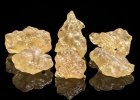
Its typical color ranges from pale yellow and honey yellow to yellow-green. Some specimens are almost clear and highly translucent, while others may appear cloudy due to small bubbles, mineral inclusions or enclosed remnants of the original material. Individual specimens vary considerably in color, clarity, structure and surface character.
✓ Authenticity guarantee ✓ Real photos of the offered specimens ✓ Carefully selected assortment ✓ Physical store
#ShowMore#
How Did Libyan Desert Glass Form?
Libyan Desert Glass formed under extremely high temperatures that melted quartz-rich rocks in the Libyan Desert region. Rapid cooling subsequently produced an exceptionally pure glassy material whose chemical composition corresponds primarily to the quartz sands and sandstones of this area.
The exact course of the event that produced the glass is still the subject of scientific research. Mineralogical and geochemical analyses, however, provide strong evidence for an origin associated with the impact of a cosmic body. Mineral structures indicating exposure to extreme temperatures and high pressures have been identified within the glass. However, the source impact crater has not yet been conclusively identified.
Appearance and Composition
Libyan Desert Glass is one of the natural glasses with an exceptionally high silica content. Its SiO₂ content reaches approximately 98%. In addition to the predominantly glassy material, small bubbles and mineral inclusions may occur, including cristobalite, lechatelierite and zircon phases formed or altered under high-temperature conditions.
The surfaces of recovered specimens have often been naturally shaped by long-term exposure to the desert environment. Alongside smoother and more translucent specimens, pieces with more pronounced structures, irregular surfaces or enclosed particles of the original material also occur.
Libyan Desert Glass with Sand Inclusions
Some specimens contain distinctive inclusions of sand and partially melted original material, creating an interesting contrast with the yellow glassy mass. You can find these pieces separately in the Libyan Desert Glass with Sand Inclusions category.
Libyan Desert Glass in Ancient Egypt
This natural material was used by people as early as prehistoric times and in ancient Egypt. Its most famous connection with Egyptian history is the yellow-green scarab in the pectoral jewelry of Pharaoh Tutankhamun, whose material has been identified through scientific examination as Libyan Desert Glass.
Libyan Desert Glass Beads
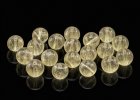
Thanks to its distinctive yellow color and translucency, Libyan Desert Glass is also used for cutting and bead making. Polished and drilled pieces can be found in the Libyan Desert Glass Beads category.
Product sorting
List of products


.png?67eda4a9)