Mesosiderites
Mesosiderites are rare stony-iron meteorites composed of an unusual mixture of iron-nickel metal and silicate rock fragments. Unlike pallasites, which typically contain distinct olivine crystals embedded in a metallic matrix, mesosiderites have a brecciated structure – a mixture of fragments of different rocks and metal.
Our selection includes natural and cut mesosiderites from several localities around the world. On cut surfaces, the contrast between bright iron-nickel metal and darker silicate components is often clearly visible, revealing their complex internal structure.
✓ Authenticity guarantee ✓ Free E-Certificate with meteorites ✓ Real photos of the offered specimens ✓ IMCA member ✓ Physical store
#ShowMore#
What Is a Mesosiderite?
Mesosiderites are stony-iron meteorites in which iron-nickel metal and silicate material are usually present in roughly comparable proportions. The silicate component consists mainly of fragments of basaltic, gabbroic and pyroxenitic rocks as well as individual mineral grains.
Their structure is the result of a very complex history of the parent body. Materials that originally came from different parts of differentiated asteroids were disrupted, mixed and subsequently reassembled into a breccia during major collisions.
How Did Mesosiderites Form?
The exact formation mechanism of mesosiderites remains a subject of scientific research. In general, however, their composition indicates mixing of metallic material with rocks derived predominantly from the crust of a differentiated planetary body.
One explanation involves major impact events that disrupted a differentiated body and subsequently mixed its metallic and silicate components. Some models also include the breakup and gravitational reassembly of the parent asteroid. This complex history is the reason for the highly heterogeneous structure of mesosiderites.
What Do Mesosiderites Look Like?
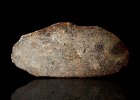
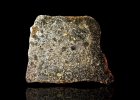
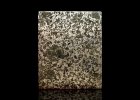
On their natural surfaces, mesosiderites may resemble more common stony meteorites or dark irregular fragments. Their characteristic structure is best seen on a cut and polished surface, where irregularly distributed bright metal can be observed among darker silicate fragments.
Individual pieces may differ considerably in the ratio of metal to silicates, the size of individual fragments and the degree of mixing. As a result, each mesosiderite slice may have a completely different appearance.
Mesosiderite vs. Pallasite
Both pallasites and mesosiderites belong to the stony-iron meteorites, but their internal structures are distinctly different. In pallasites, individual olivine crystals are usually clearly visible within an iron-nickel matrix. Mesosiderites, by contrast, consist of an irregular brecciated mixture of metal and various silicate rock fragments.
Mesosiderites therefore usually do not have the typical “olivine in metal” appearance of pallasites. Their collector appeal lies mainly in their exceptionally complex mixture of materials, which records the collisional history of their parent body.
Mesosiderites from Different Localities Around the World
Our selection includes, for example, Vaca Muerta from Chile, Catalina 500 from Chile and Tanezrouft 091 from Algeria. Individual meteorites differ in structure, degree of weathering, the ratio of metallic to silicate components and type of processing.
How to Choose a Mesosiderite?
If you want to preserve the original appearance of the meteorite, a natural specimen is a suitable choice. For observing the internal composition and contrast between metal and rock fragments, cut and polished pieces are usually the most interesting.
When choosing a specimen, we recommend considering the locality, weight, ratio of metallic to silicate components, state of preservation and type of surface treatment. Because mesosiderites contain iron-nickel metal, they may be sensitive to moisture and should be stored in a dry environment.
Product sorting
List of products


.png?67eda4a9)