Iron meteorites
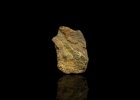
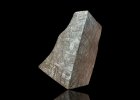
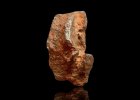
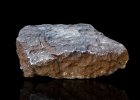
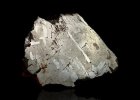
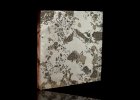
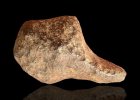
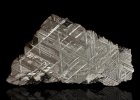
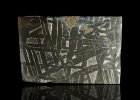
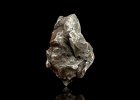
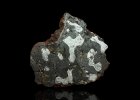
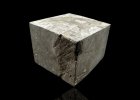
Choose iron meteorites from various localities around the world – from natural fragments to cut and polished specimens with visible internal structures. Each product includes its exact weight, origin and photographs. Unless a random selection is stated, you always purchase the specific specimen shown.
✓ Authenticity guarantee | ✓ IMCA member | ✓ Physical store | ✓ Free E-Certificate with every meteorite
#ShowMore#
What Are Iron Meteorites?
Iron meteorites consist predominantly of iron-nickel alloys, especially the minerals kamacite and taenite. Most originate from the metallic parts of ancient asteroids that heated up, partially or completely melted and separated into layers during the early history of the Solar System.
This process is known as differentiation. During differentiation, dense metallic material sank toward the center of the parent body, while lighter silicate rocks remained in the outer layers.
How Are Iron Meteorites Classified?
The traditional structural classification divides iron meteorites according to their internal crystalline structure into hexahedrites, octahedrites and ataxites. Their structure is assessed primarily on a polished and etched cut surface.
Modern classification also uses chemical composition and trace elements. Iron meteorites are therefore also assigned to chemical groups such as IAB, IIAB, IIIAB, IVA or IVB. Structural and chemical classifications describe different properties of a meteorite and cannot simply be used interchangeably.
Hexahedrites
Hexahedrites generally have a low nickel content, approximately 5–6%, and consist predominantly of kamacite. After etching, they do not display a Widmanstätten pattern, although fine Neumann lines caused by strong shock may be visible in some specimens.
A well-known example of a hexahedrite is the Braunau meteorite.
Octahedrites
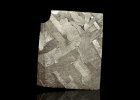
Octahedrites are the most common structural type of iron meteorite. They contain both kamacite and taenite and, on a properly polished and etched surface, may display characteristic Widmanstätten patterns.
According to the width of their kamacite lamellae, octahedrites are divided into very coarse, coarse, medium, fine and very fine types. Well-known octahedrites include Gibeon, Muonionalusta, Sikhote-Alin and Campo del Cielo.
Ataxites
Ataxites are iron meteorites with a high nickel content, generally above approximately 16%. They contain a large proportion of taenite and usually do not display a macroscopically visible Widmanstätten pattern even after etching.
The best-known example of an ataxite is Hoba from Namibia.
Widmanstätten Structure
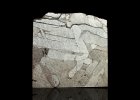
The Widmanstätten structure consists of intersecting lamellae of kamacite and taenite. It formed during the extremely slow cooling of metallic material inside the parent asteroid over millions of years.
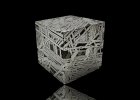
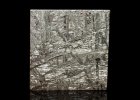
The pattern is not normally visible on the natural surface of a meteorite. It becomes apparent only after the metal surface has been cut, polished and professionally etched.
How to Choose an Iron Meteorite?
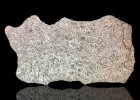
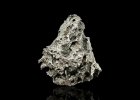
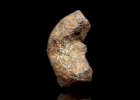
Natural fragments are suitable for collectors who prefer the preserved original shape and surface of the meteorite. Cut and polished specimens provide a better view of the internal structure, metallic minerals and any Widmanstätten pattern that may be present.
When choosing a specimen, we recommend considering its locality, classification, weight, state of preservation and type of processing. Iron meteorites may corrode when exposed to moisture, so they should be stored in a dry environment and handling them with bare hands should be minimized.
-
 Iron Meteorite Individuals
-
Cut iron meteorites
-
Agoudal
-
Aletai
-
Bendegó
-
Campo del Cielo
-
Canyon Diablo
-
Cape York
-
Domeyko
-
Dronino
-
Gebel Kamil
-
Georgetown (iron)
-
Gibeon
-
Henbury
-
Hickman
-
Hoba
-
Kaalijärv
-
Maslyanino
-
Mundrabilla
-
Muonionalusta
-
Nantan
-
Orotukan
-
Saint-Aubin
-
San Juan 090
-
Sikhote Alin
-
Steinbach
-
Toluca
-
Turgut
-
Udei Station
-
Wabar
-
Wolf Creek

Product sorting
List of products


.png?67eda4a9)