Moldavite
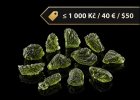
Choose from more than 1,000 moldavites from various Czech localities – from small specimens suitable for beginning collectors to rare complete forms and deeply sculpted pieces.
For each specimen, you will find its exact weight, locality, detailed photographs and a video. You always purchase the specific moldavite shown with the product, unless stated otherwise.
Our selection includes moldavites from Besednice, Nesmen, Maly Chlum, Chlum nad Malsi, Marouskovo pole and many other localities. A certificate of authenticity can be purchased separately for your moldavite.
✓ Authenticity guaranteed ✓ Video of every piece ✓ Physical store ✓ Hundreds of satisfied customers
#ShowMore#
What is moldavite?
Moldavite is a natural silicate glass belonging to the group of tektites. Its chemical composition may vary slightly from one specimen to another.
The approximate proportions of its main components are: SiO2 78.81%, Al2O3 10.63%, K2O 2.62%, CaO 2.07%, MgO 1.85%, FeO 1.60%, Na2O 0.55%, TiO2 0.35%, Fe2O3 0.24% and MnO 0.05%.
How were moldavites formed?
Moldavites formed approximately 14.8 million years ago when a large meteorite struck the area of present-day Germany. The impact melted the uppermost layers of the Earth’s surface and ejected the molten material into the surrounding area.
The Ries impact crater is located in Bavaria and measures approximately 24 kilometres in diameter. Compared with common rocks, the chemical composition of moldavite is similar to sandy clay.
Colour, lustre and shapes of moldavites
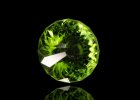
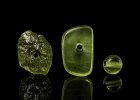
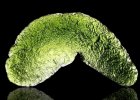
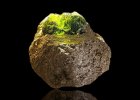
Moldavites occur in various shades of green to brown. In rare cases, they may also display a bluish tint. Their surface may be matt, glossy, glassy or appear almost lacquered.
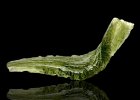
Typical shapes include discs or half-discs, spheres, dumbbells, drops, ovals and rods. These preserved shapes are known as complete forms, as they have retained their original form since the time of their formation.
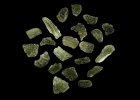
More commonly, moldavites occur as fragments whose original shape can no longer be reliably determined.
Bubbles and internal structure
Moldavites may contain bubbles ranging in size from a few tenths of a millimetre to cavities several centimetres across. Their internal structure also characteristically contains lechatelierite, a form of amorphous SiO2.
Weight of moldavites
The average weight of a moldavite is approximately 5 grams. The largest known specimen comes from Slavětice in Moravia and weighs 265.5 grams.
Surface sculpture
One of the most distinctive characteristics of moldavite is its surface sculpture. The surface may feature fine or deep pits, grooves, notches and sharp projections.
This sculpture developed through the gradual action of weak acids present in the surrounding sediments. Less resistant areas of the surface slowly dissolved, while more resistant parts remained intact.
Individual specimens could also break during this process. Fracture surfaces therefore usually display less pronounced sculpture than the original surface of the moldavite.


Product sorting
List of products


.png?67eda4a9)